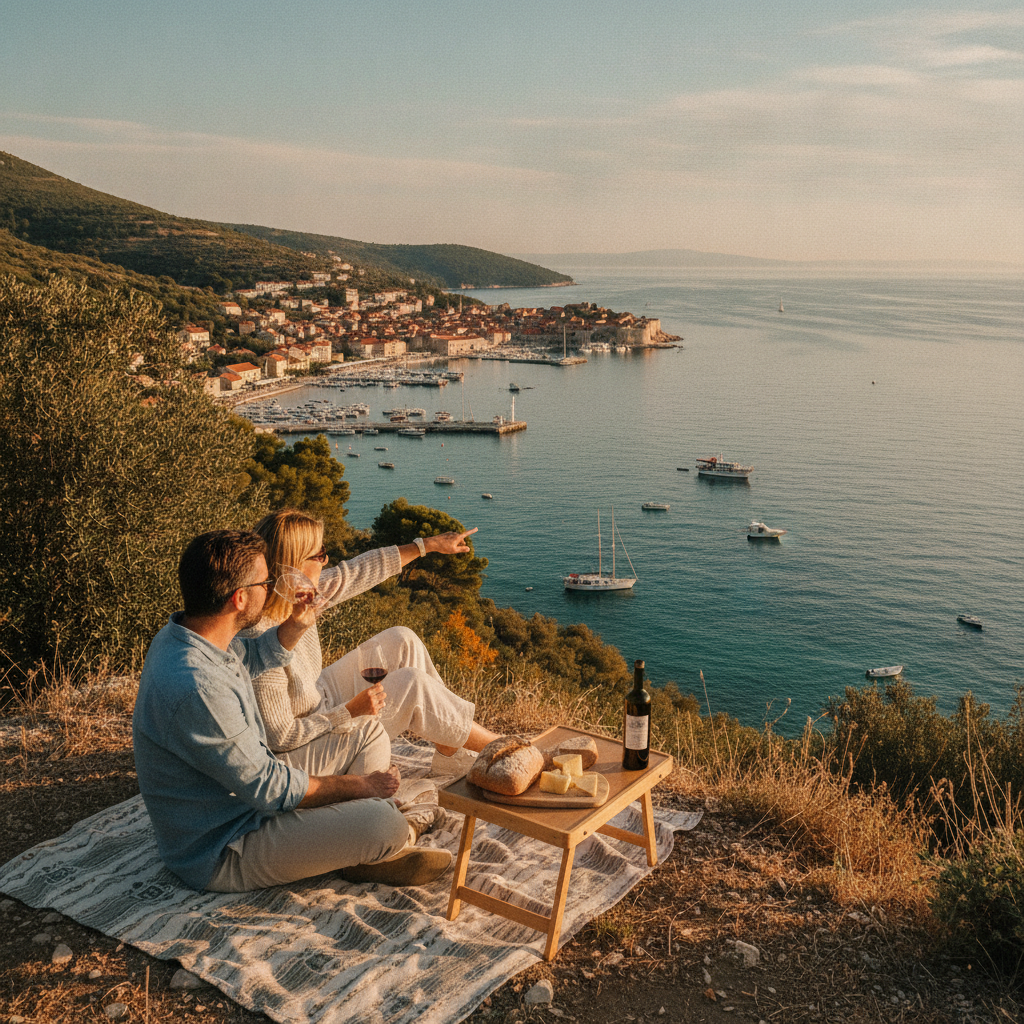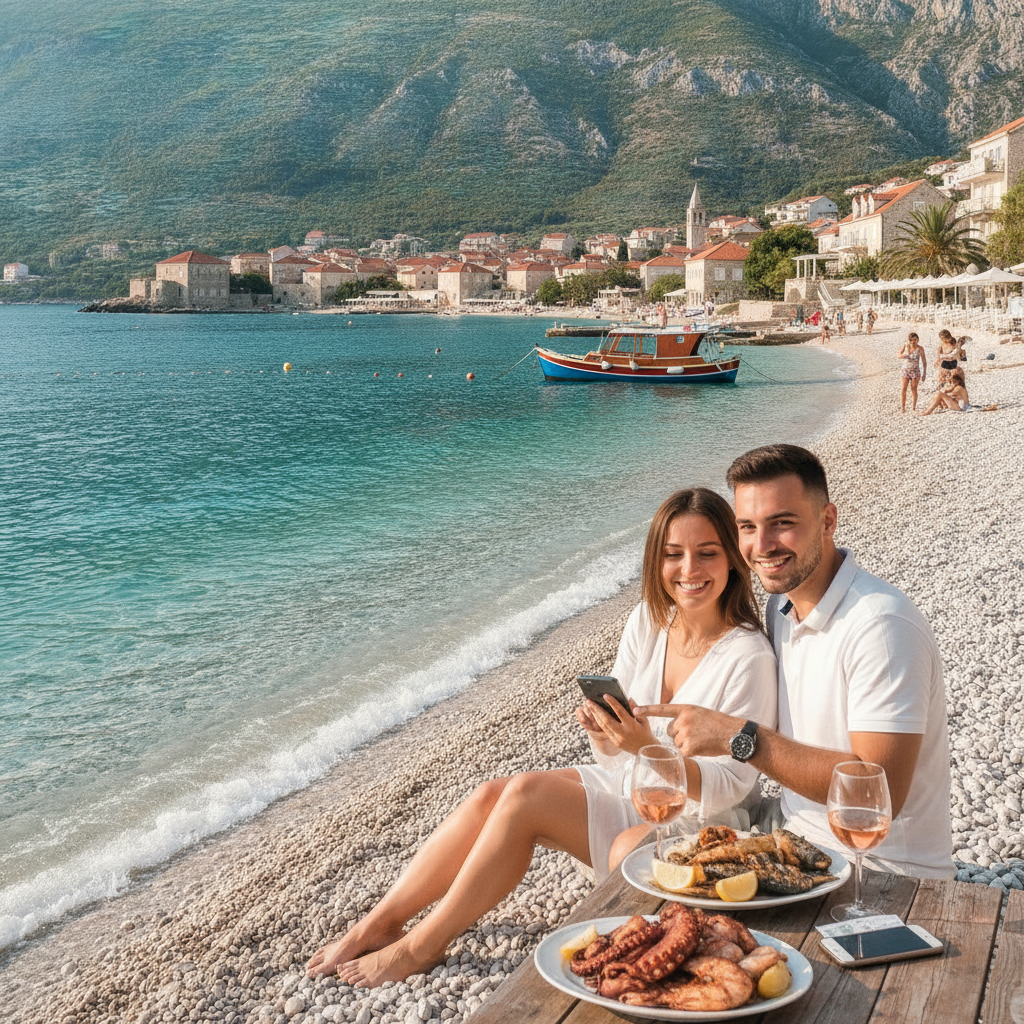
There is a particular kind of disappointment that settles in when a place you once loved for its affordability becomes indistinguishable from every other expensive destination on the map. The Croatian coast, the Amalfi towns, the Greek island circuits — these were once the province of the genuinely budget-conscious traveler, places where a week of good food, comfortable rooms, and unhurried days by the water didn't require a significant financial sacrifice. That era has largely passed. What remains is a corrective of sorts: the Western Balkans in July and August, where the Adriatic and Ionian coastlines of Albania and Montenegro still operate by a different economic logic, one that rewards travelers willing to look just south and east of where everyone else is headed.
The Geography of the Price Gap
The Western Balkans occupy a stretch of southeastern Europe that borders some of the continent's most visited coastlines without sharing their pricing structures. Albania's Riviera — the string of small towns and coves running south from Vlorë toward Sarandë — sits directly across the water from Corfu, yet accommodation and meal costs remain dramatically lower than their Greek counterparts. Montenegro's Bay of Kotor, a deeply indented fjord-like inlet surrounded by fortified medieval towns, draws comparisons to Croatia's Dalmatian coast while charging a fraction of what Dubrovnik's tourism economy demands. This gap exists not because the scenery or infrastructure is meaningfully inferior, but because these countries entered the mass tourism cycle later and haven't yet fully repriced their offerings to match Western European expectations. For travelers who understand how destination pricing evolves over time, that lag is a window worth using.
What Midsummer Actually Costs Here
In peak July and August, when the Amalfi Coast charges rates that would make a mid-range hotel in Paris look modest, guesthouses along the Albanian Riviera — locally called *bujtina* — remain accessible at prices that feel almost anachronistic. A clean, family-run room with a sea view in Dhërmi or Himara can cost less in high season than a budget hostel bunk in Dubrovnik during shoulder months. Meals in Albania operate on a similarly generous scale: a table of grilled fish, salads, and local *raki* — the grape-based spirit that functions as both aperitif and social ritual — rarely strains even a careful daily budget. Montenegro is somewhat pricier, particularly around Budva and Kotor, where European tourism has made deeper inroads, but it still sits well below comparable Croatian destinations. The combination of lower baseline costs, a favorable exchange rate for euro-zone visitors spending converted currencies, and fewer premium-tier tourist traps means that midsummer spending here can resemble what shoulder-season spending looked like in Croatia a decade ago.
The Cultural Economy of Slow Hospitality
Part of what makes the Western Balkans economically different is cultural. The region's hospitality tradition — particularly in Albania, where the ancient code of *besa*, a form of sworn honor and trust extended to guests, still shapes social interaction — tends to produce a style of tourism that resists the transactional efficiency of high-volume destinations. Guesthouses are often family operations passed between generations. Restaurant owners frequently source ingredients locally and price meals according to what the community can sustain rather than what the international market will bear. This isn't a romantic abstraction; it has direct financial consequences for the traveler. The absence of the intermediary layers that inflate costs in more fully commercialized destinations — the tour operators, the branded beach clubs, the curated experience packages — means that spending goes further and reaches people more directly. A traveler eating well, sleeping comfortably, and moving between towns by shared *furgon* minibus is operating inside an economy that hasn't yet been fully optimized for extraction.
Reading the Region Before It Changes
The honest caveat embedded in any conversation about Western Balkan value is that this moment is not permanent. Albania in particular is attracting significant infrastructure investment, and the coastal road improvements and resort developments already visible between Sarandë and Vlorë suggest that the pricing logic described here has a shelf life. Kotor, already a UNESCO World Heritage Site, has seen its old town fill with wine bars and boutique hotels at a pace that mirrors early-stage Dubrovnik. The trajectory is readable, and the travelers who move through a region during its pre-saturation phase — before Airbnb normalization, before the branded hotel groups arrive in force, before the day-trip cruise ships begin scheduling regular stops — are the ones who experience both the culture and the economics in their most intact form. Waiting for the region to become more convenient or more recognizable tends to be expensive in both financial and experiential terms.
Making the Itinerary Work on a Real Budget
For those ready to commit to the region, a practical midsummer circuit might begin in Tirana — Albania's capital, where the *Blloku* neighborhood offers some of the most affordable café culture in Europe — before moving south through the Riviera towns by furgon and eventually crossing into Montenegro via Shkodër. Ferry connections between Sarandë and Corfu exist for those who want a brief comparison before returning north. Budget tools like Booking.com and Hostelworld list properties well into the smaller Albanian towns, though local guesthouses found on arrival often beat online rates. The key structural advantage of the region is that its attractions — swimming coves, Ottoman-era architecture, mountain villages within day-trip distance of the coast — require little more than transport and a willingness to figure things out incrementally. The costs of structured tours and pre-packaged experiences that inflate budgets elsewhere simply don't dominate here yet.
The Value of Arriving Before Everyone Else Does
The traveler who arrives in Dhërmi in July and pays guesthouse rates that feel almost implausible by Western European standards is experiencing something that has a precise expiration date. The Mediterranean destinations that now charge those rates were once in the same position — unknown enough to be cheap, beautiful enough to attract the curious, and ultimately transformed by the attention their value generated. That cycle is neither avoidable nor necessarily regrettable; it reflects the way tourism economies mature. But understanding where a region sits within that cycle is one of the most reliable ways to find genuine value, and the Western Balkans in midsummer are positioned in exactly the same place the Croatian coast occupied two decades ago. The water is the same Adriatic blue. The fish on the grill is the same catch. The price, for now, is something else entirely.