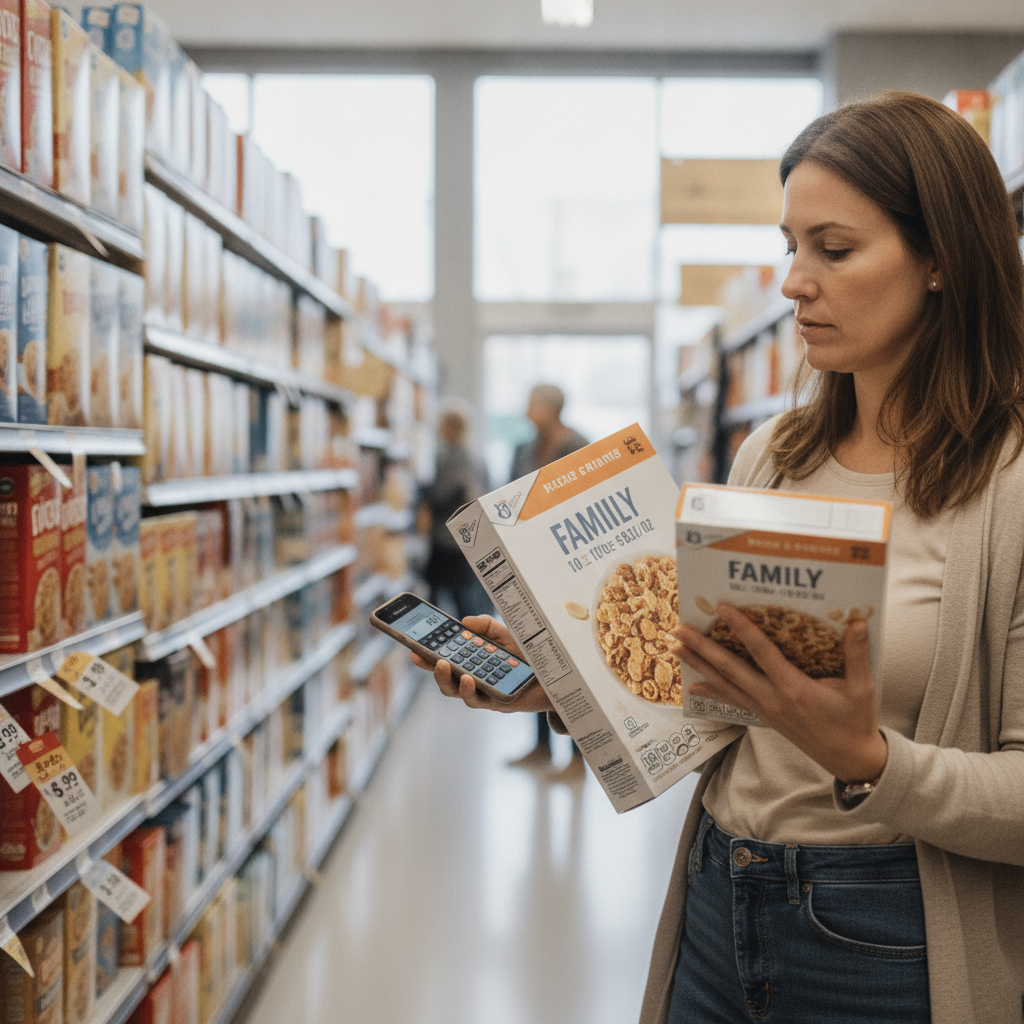
Grocery stores are built around perception. The way products are packaged, stacked, and priced is designed to make certain items feel like obvious choices — the family-size box that looks generous, the sale tag that implies urgency, the buy-two-get-one that suggests irresistible value. Beneath all of that presentation, though, is a single mathematical reality: how much something costs per unit of measure. That one number, when a shopper knows how to read it, cuts through nearly every pricing tactic a retailer can use.
What Unit Pricing Actually Measures
Unit price is simply the cost of a product broken down to a standard measurement — per ounce, per liter, per count, or per gram. Most grocery stores in the United States are legally required to display this figure on shelf labels, but it's routinely overlooked by shoppers focused on the total price tag. A 32-ounce jar of peanut butter priced at $6.49 and a 16-ounce jar priced at $3.10 look similar at a glance, but the unit price tells a different story immediately. Comparing those per-ounce figures makes the better purchase obvious without any guesswork.
Why Total Price Is a Misleading Signal
Spending less at checkout doesn't always mean spending less per use, and this is where many grocery budgets quietly lose ground. A smaller package of pasta sauce at Trader Joe's may cost $2.49 while a larger one costs $4.99 — and the instinct to grab the cheaper-looking option is understandable. But if the larger container offers significantly more servings per dollar, the lower sticker price becomes the more expensive choice over time. Shoppers who train themselves to ignore total price and focus on unit price tend to make purchases that hold up better across a month of meals than those chasing the lowest number on the shelf.
How Bulk Buying Fits Into the Equation
Bulk purchasing has a strong reputation as a money-saving strategy, and unit pricing is what makes that reputation earned — or exposes when it isn't. Stores like Costco and Sam's Club are built around the premise that larger quantities mean lower per-unit cost, and in many product categories that holds true. But it's not universal. Some bulk items at warehouse stores carry a higher unit price than their counterparts at a standard grocery store during a sale cycle. Running the math before assuming bigger means cheaper is the only reliable way to know. The bulk aisle rewards calculation, not assumption.
When Sales and Coupons Complicate the Calculation
Promotional pricing adds a layer of complexity that unit price math is especially well-suited to handle. A store-brand item on sale may beat a name-brand product with a coupon attached — or the reverse may be true. Apps like Flipp and Ibotta surface weekly deals across multiple retailers, but they don't automatically rank those deals by unit value. That step still falls to the shopper. When a sale price is available, simply recalculating the unit price using the discounted total gives an accurate comparison. Coupons work the same way: subtract the coupon value from the shelf price, then divide by the unit count or weight to find the real cost.
Building the Habit Without Doing Mental Gymnastics
For most people, unit price comparison becomes second nature within a few weeks of consistent practice. The initial friction is real — standing in an aisle doing quick division can feel slow — but the mental load drops significantly as the habit solidifies. Many shoppers keep a basic calculator app open on their phone during grocery runs until the process feels automatic. Stores like Kroger and Whole Foods display unit prices on shelf tags in small print, so knowing where to look is the first step. You don't need to compare every item every time; focusing on the ten to fifteen products you buy most often is enough to create meaningful savings.
Where Grocery Pricing Is Headed
Retailers are increasingly experimenting with dynamic pricing — shelf tags that update digitally based on demand, time of day, or inventory levels. As this technology spreads beyond pilot programs, unit price awareness becomes even more valuable, because the displayed total price may shift week to week in ways that are harder to track by memory alone. Tools that aggregate price history across stores are beginning to appear in mainstream apps, and grocery loyalty programs are starting to surface personalized unit-price data for frequent purchases. The shoppers who already understand the underlying math will be best positioned to use those tools effectively, regardless of how the pricing environment continues to shift.
Unit price math isn't a trick or a temporary hack — it's a foundational skill that applies equally at a discount grocer, a warehouse club, and a conventional supermarket. The savings it generates aren't dramatic on any single trip, but they accumulate steadily across months and years of routine shopping. Mastering it requires no special tools, no memberships, and no coupons: just the discipline to look past the sticker and ask what something actually costs.