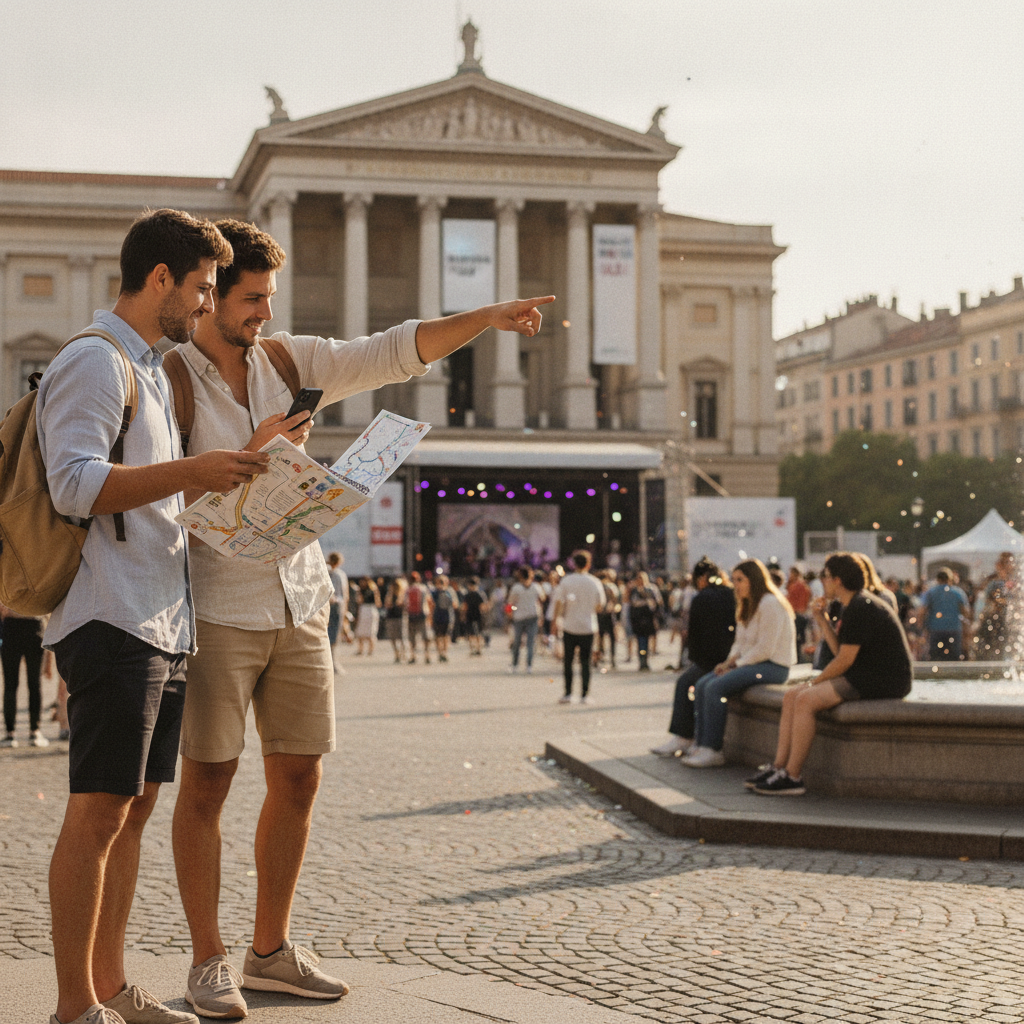
There is a particular kind of traveler who arrives in a city and spends the first afternoon simply walking — no map app running, no queue to join, no entrance fee to pay. This traveler tends to leave knowing more about a place than the one who spent three times as much on curated tours and fast-track tickets. The difference isn't luck or local knowledge by birthright. It's a structural approach to a trip — one built around the rhythms a city already offers for free or close to it, rather than the packaged version sold to visitors.
A two-week trip, structured intentionally, can absorb the best of a destination's cultural life at a fraction of the cost most people assume is unavoidable.
Understanding How Civic Culture Actually Gets Scheduled
Most cities operate on a cultural calendar that runs parallel to — and largely invisible from — the mainstream tourist infrastructure. Municipal governments, local arts councils, and neighborhood associations regularly program free concerts, open-air film screenings, public market days, and civic ceremonies. These events are typically listed on city government websites, neighborhood association boards, and local Facebook groups rather than on TripAdvisor or Lonely Planet. Before departure, spending an hour with a city's official cultural affairs portal — many European and Latin American cities maintain robust ones — will surface a week's worth of free programming that no standard guidebook will ever mention.
Mapping Museum Free-Access Windows Before You Book Anything
Almost every major museum in Western Europe, and a significant number in North America and Latin America, offers free or reduced-price admission on at least one day or evening per week. The Louvre in Paris is free on the first Saturday evening of each month. The Smithsonian Institution in Washington, D.C., maintains free admission across its entire campus permanently. The Prado in Madrid offers free access in the final two hours before closing each day. These windows aren't secrets — they're published openly — but they require advance research to use effectively. Structuring an itinerary around these access times, rather than treating museums as fixed daily expenses, can strip several hundred dollars from a two-week cultural trip without removing a single meaningful experience.
The Art of the Civic Walk — Beyond the Tourist Circuit
The *paseo* (a Spanish term for an evening walk taken as social ritual rather than exercise) and the Italian *passeggiata* describe something most tourist itineraries never replicate: movement through a city as a form of participation rather than observation. Walking routes that thread through residential neighborhoods, market squares, and working waterfronts reveal a city's architecture, social class geography, and daily rhythms in ways that no monument visit can. Apps like Komoot and Wikiloc carry user-generated walking routes that locals have mapped through areas no bus tour visits. Downloading two or three of these routes before departure costs nothing and transforms an afternoon that might otherwise go to an expensive attraction into something genuinely irreplaceable.
Building the Itinerary Around Low-Cost Cultural Anchors
A two-week itinerary becomes coherent — rather than just cheap — when it's built around what might be called cultural anchors: fixed, low-cost events that structure the days around them. A free outdoor concert on Thursday evening becomes the anchor for that day, with museum visits scheduled nearby in the afternoon. A Saturday morning market in a working-class district like Vallecas in Madrid or Shaanxi Road in Shanghai becomes the morning anchor, with a free walking route planned afterward. This approach prevents the itinerary from collapsing into a list of expensive admissions strung together by expensive meals. It makes a trip feel lived-in, because it is — at least partially — the life of the place.
Finding Neighborhood-Level Events Through Local Sources
The gap between what a city offers and what a visitor finds is almost entirely a function of where they look. Local newspapers — particularly free weekly papers distributed in cafes and libraries — carry event listings that reflect actual neighborhood life. Community boards outside libraries and cultural centers often post flyers for events that will never appear in any app. In cities like Lisbon, Buenos Aires, and Tbilisi, local Facebook groups in English for expats and long-term visitors are extraordinarily useful, since these residents have already done the work of identifying what's genuinely worth attending. Spending thirty minutes before departure joining two or three of these groups, and posting a simple question about what's happening during your dates, typically returns more useful information than any guidebook published in the last three years.
Managing Daily Costs When the Itinerary Runs on Low-Cost Culture
A trip structured around free museums, civic walks, and public events doesn't eliminate daily costs — it restructures them. Food, transport, and accommodation remain real expenses, but they tend to be managed differently when the entertainment budget has been stripped to near zero. Eating near markets rather than tourist centers, using day transit passes rather than taxis, and choosing accommodation in residential neighborhoods (a strategy worth its own consideration) all align naturally with a cultural itinerary that already moves away from tourist zones. The budget freed from entrance fees flows more easily toward a long lunch at a neighborhood restaurant or a locally made souvenir — the kinds of spending that actually become memories.
Making the Second Week Work Harder Than the First
By the end of the first week, you'll have identified two or three things worth returning to — a neighborhood that deserves a second afternoon, a market that runs again on the weekend, a museum section you didn't finish. This is the structural advantage of a two-week trip over a shorter one: the second week can be smarter than the first. Rather than filling every day with new destinations, the second week can deepen what the first week opened. That second visit to the free municipal gallery, this time knowing which floor holds the local artists, costs nothing and lands completely differently than it would have on day two. A trip that ends this way — with the feeling of having understood something rather than simply seen it — is the best possible return on a modest travel budget.
The traveler who spends that first afternoon simply walking isn't being cheap. They're being methodical. By the end of two weeks, a trip built around the cultural infrastructure a city already offers its own residents will have cost significantly less and delivered something that no curated itinerary at any price reliably produces: the sense of having actually been somewhere.