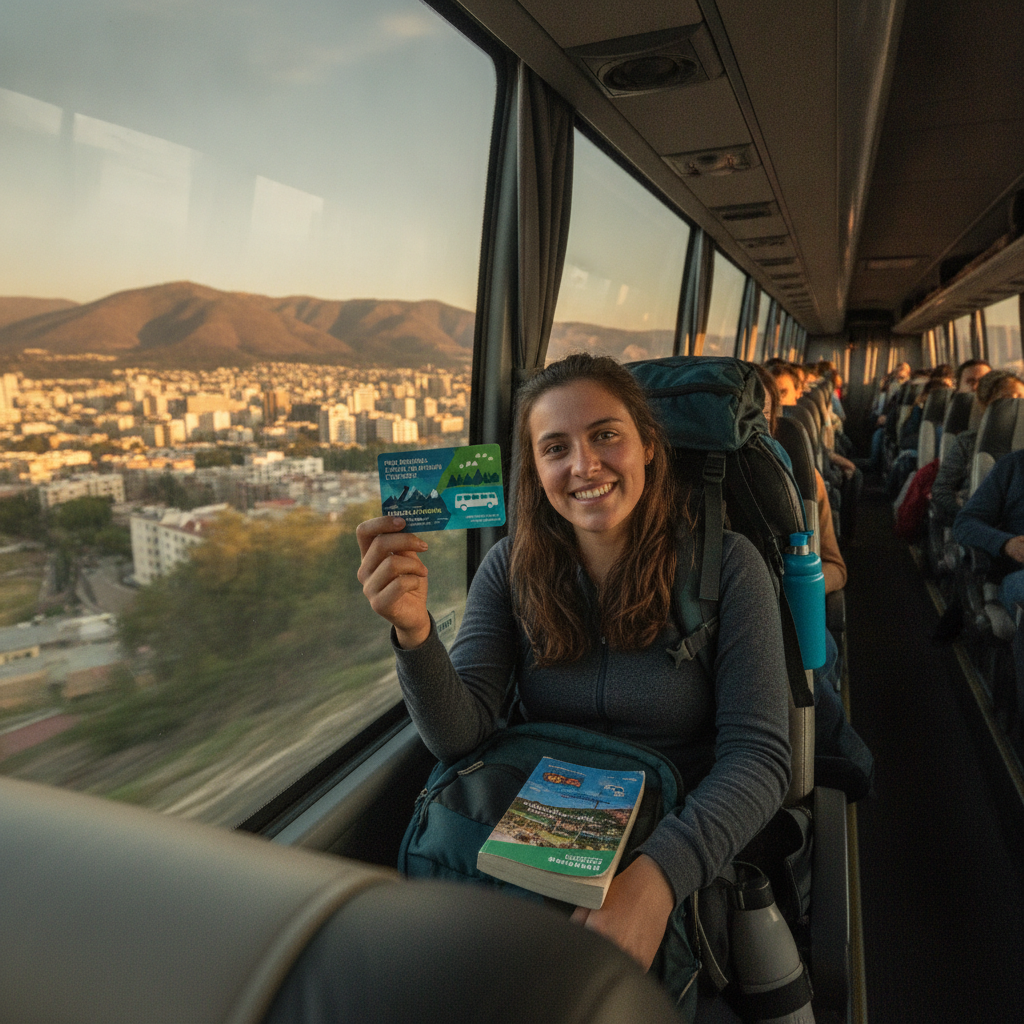
Flying between cities in Argentina, Chile, and Uruguay feels logical until you add up the airport transfers, baggage fees, and time spent clearing domestic security. Travelers who skip the bus networks in the Southern Cone are almost always leaving money on the table — sometimes a lot of it. The long-distance bus infrastructure across this region is genuinely excellent, and a regional pass built around it can cut transportation costs dramatically while giving you more flexibility than any flight ever would.
Understand What a Southern Cone Bus Pass Actually Covers
Several operators — most notably Buquebus for the Río de la Plata crossing and companies like Andesmar, Cata Internacional, and Turbus — offer multi-journey packages or discounted fare structures for travelers buying tickets in bulk or across routes. These aren't always marketed as a single branded "pass" the way Eurail is in Europe, but booking multiple legs together, especially through consolidated ticketing platforms like Plataforma 10 or RedBus, often unlocks meaningful savings over buying each ticket individually at the counter.
Map Your Route Before You Book Anything
The biggest mistake travelers make with regional bus travel is booking reactively — grabbing the next available bus to wherever feels right. In the Southern Cone, mapping your full three-week arc first lets you cluster route purchases strategically. A Buenos Aires to Mendoza overnight leg, followed by a Mendoza to Santiago crossing through the Andes, followed by a Santiago to Valparaíso connection, costs far less when treated as a sequence rather than three separate impulse decisions. Knowing your rough itinerary also tells you which operators you'll be using repeatedly, which opens up loyalty-adjacent savings.
Book Overnight Legs to Double Your Savings
Overnight buses in Argentina and Chile are genuinely good — cama and semi-cama seating reclines almost flat, and the top-tier services include meals, blankets, and even wine on certain routes. When you book an overnight leg, you're eliminating a night's accommodation cost while the bus does the travel work. A Santiago to Puerto Montt bus, for instance, runs roughly twelve hours overnight and lands you in the Chilean Lake District at dawn having paid for transport and lodging in a single transaction. Over a three-week trip with four or five overnight legs, the savings compound fast.
Use Plataforma 10 and RedBus to Compare Fares Across Operators
These two platforms function as aggregators for the bus routes that span Argentina, Chile, Uruguay, and parts of Peru and Brazil. Rather than walking terminal to terminal at a bus station like Retiro in Buenos Aires, you can compare fare tiers across competing operators, filter by departure time and seat class, and lock in your price digitally. Fares listed on these platforms are often lower than counter prices because operators discount inventory to fill seats in advance. Booking three to five days ahead on popular routes tends to hit the sweet spot between availability and price.
Cross the Andes by Bus Instead of Plane
The bus crossing between Mendoza and Santiago is one of the most scenic overland journeys in South America, and it costs a fraction of the cheapest short-haul flight on the same route. The journey through the Paso Los Libertadores takes four to six hours depending on border processing, and the mountain scenery through the Andes is genuinely spectacular. Flying this route means missing all of that and paying for airport infrastructure on both ends. The border crossing itself is straightforward for most passport holders, and bus operators handle the paperwork flow efficiently with experienced crossing procedures.
Budget for Seat Class the Way You'd Budget for a Hotel
Bus seat classes in the Southern Cone aren't cosmetic distinctions — the gap between a basic semi-cama seat and a full cama or suite-class seat is meaningful on a twelve-hour journey. Treating your seat upgrade as a lodging expense reframes the math clearly. Spending an extra fifteen to twenty dollars on a cama seat for an overnight run is comparable to upgrading from a dorm bed to a private room, except you also arrive at your destination having slept. For daytime routes under five hours, the cheaper tier is usually fine. Match your seat investment to journey length.
Combine the Bus Pass Strategy With a Base City
Using one city as a hub — Buenos Aires is the obvious anchor, but Santiago works just as well depending on your itinerary — reduces the number of one-way routes you need and makes multi-city fare bundling easier. From Buenos Aires, you can reach Montevideo via the Buquebus ferry, Mendoza by overnight bus, and Iguazú by a long-haul northern route. Operating from a base also means you can leave a bag behind, travel lighter on day trips, and avoid the baggage surcharges that short-haul flights almost always attach. A well-chosen base city is one of the most underused tools in budget travel.
Track Your Transport Spend Against the Flight Alternative Daily
Running a simple mental (or notes-app) tally of what each bus ticket cost versus what the equivalent flight would have run keeps the savings concrete and motivating. Over three weeks, most travelers find the differential reaches several hundred dollars — money that can fund accommodation upgrades, food experiences, or an activity that would otherwise feel out of budget. Keeping the comparison visible also sharpens future booking decisions. When you see that the bus costs a fifth of the flight and gets you there in time for dinner, the choice becomes automatic.
Bus networks in the Southern Cone are only improving — operators are updating fleets, digital booking infrastructure is expanding, and cross-border routes are becoming more seamless as payment systems modernize. Travelers who build their itineraries around the region's bus infrastructure now are positioning themselves well for a travel style that rewards patience and planning with experiences and savings that short-haul flying simply doesn't offer.