Budget flights look like a deal right up until you add the checked bag fee, the airport transfer, the night in a hotel near the terminal, and the hours you lose getting there and back. That's the hidden math most travelers skip. Overnight buses and trains reframe the whole equation — instead of paying separately for a seat and a bed, you get both in one ticket, often for a fraction of what you'd spend splitting those costs across two different bookings.
The Double-Cost Problem Budget Flights Create
When you book a cheap flight between two cities, you're solving the transportation problem but leaving the accommodation problem fully intact. If your flight is early morning or late at night, you often need a place to stay near the airport the night before or after — which quietly adds to your total trip cost. An overnight train or bus removes that calculation entirely. You board in the evening, sleep while the miles pass, and arrive in the morning ready to go, with one fewer night of accommodation to pay for.
How the Real Cost Comparison Actually Works
The honest way to compare overnight travel against flying isn't ticket price versus ticket price — it's total trip cost versus total trip cost. A budget flight from Madrid to Lisbon might seem cheap, but once you add a taxi to a budget airport, a night at a guesthouse after a late arrival, and the time cost of security lines, the overnight bus on Rede Expressos starts looking like a genuinely smart financial move. Do the full math every time, including transfers and accommodation on either end.
Sleeper Trains Offer the Best Value on Longer Distances
For routes that span five or more hours, sleeper trains are where overnight travel really earns its place. Europe's Nightjet network connects cities like Vienna, Munich, and Rome with couchette and private sleeper options that fold transport and a bed into one booking. You don't need to splurge on a private cabin to benefit — a couchette berth in a shared compartment is usually affordable and comfortable enough for a solid night of rest. You arrive in a new city without a hotel night on your tab.
Overnight Buses Are the Budget Floor on Many Routes
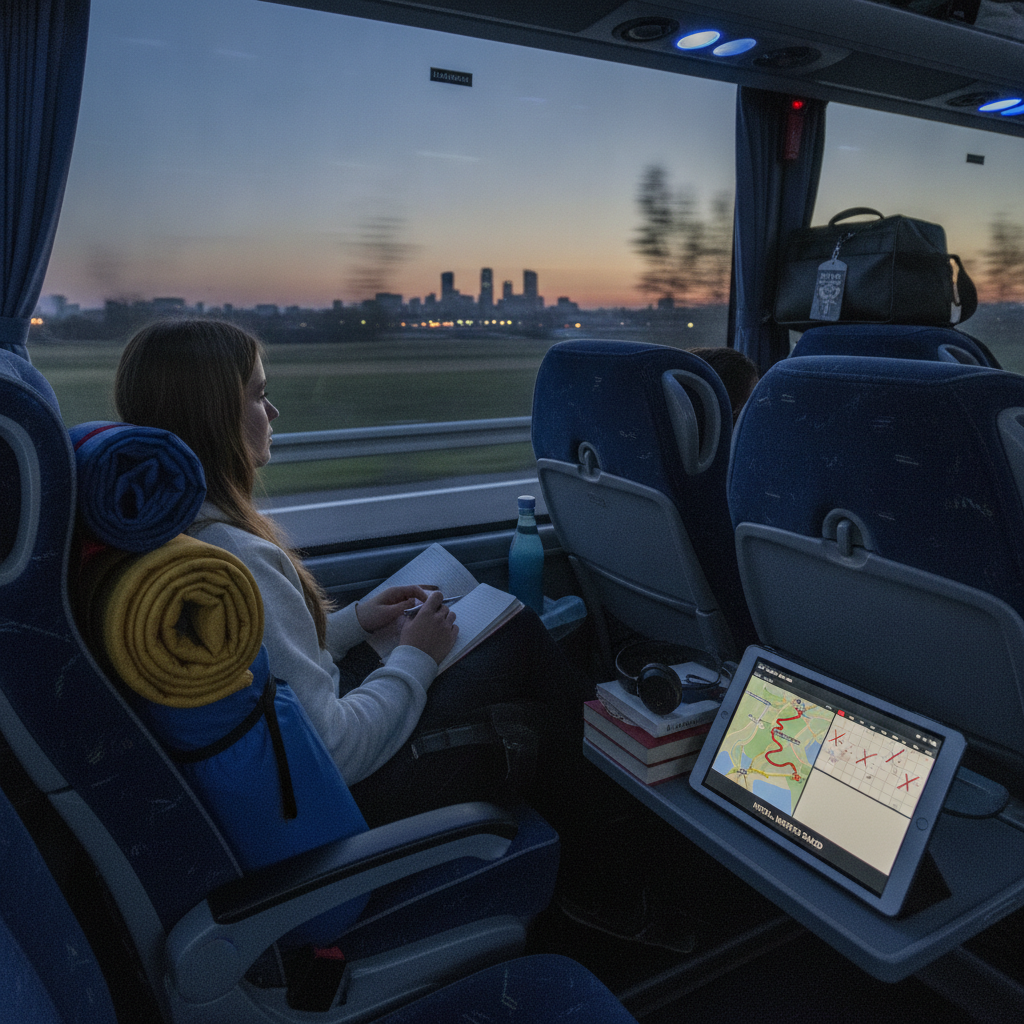
If trains feel out of budget, overnight buses drop the floor even further. Operators like FlixBus across Europe and Busbud-listed carriers across Southeast Asia and Latin America run long-distance overnight routes where a reclining seat costs a small fraction of what a hostel dorm would. The comfort level varies, so it's worth reading recent traveler reviews before booking, but on well-trafficked routes the experience is generally reliable. Bring a travel pillow, a light blanket, and an eye mask, and you've essentially turned a bus ticket into a budget accommodation solution.
You Gain Back Daytime Hours You'd Otherwise Lose
One of the underrated advantages of overnight travel is what it does for your daytime schedule. Flying between cities — especially when you factor in airport time — can swallow most of a day that could otherwise be spent exploring. When you travel overnight, that same transit time happens while you sleep, leaving your days completely intact. For shorter trips where every day counts, this effectively makes your trip longer without adding to its cost. That's a meaningful efficiency that pure ticket-price comparisons never capture.
Where Overnight Routes Make the Most Financial Sense
Not every route rewards this approach equally. The sweet spot is typically five to twelve hours of travel time — long enough to justify sleeping through, short enough that you arrive reasonably rested. Think Barcelona to Paris, Chiang Mai to Bangkok, or Buenos Aires to Mendoza. Routes shorter than four or five hours usually don't give you enough sleep time to make the overnight format worthwhile, and routes longer than twelve hours can leave you arriving exhausted, which erodes the value. Research the specific route duration before committing.
Booking Strategy to Get the Best Overnight Fares
For trains, booking directly through national rail operators — like Renfe in Spain or Trenitalia in Italy — often gets you better prices than third-party aggregators, especially when booking a few weeks ahead. For overnight buses, Busbud and Omio are solid for comparing routes and prices across multiple carriers in one search. Flexibility on departure date by even one or two days can make a significant difference in price. Midweek overnight departures are usually cheaper than weekend ones, and booking during the carrier's sale windows adds another layer of savings.
Packing Smart Makes Overnight Travel Much More Comfortable
The practical side of overnight travel matters more than most people expect before their first trip. Having your toiletries, a change of clothes, and a few comfort items in an easy-access daypack — separate from your checked luggage or overhead bag — means you can freshen up at the destination without unpacking everything. Noise-canceling headphones or good earplugs make a real difference on buses where other passengers may be awake and talkative. Small preparation costs almost nothing but meaningfully improves the quality of sleep you actually get.
Overnight buses and trains work best when you stop thinking of them as a compromise and start thinking of them as a two-for-one travel tool. The ticket price covers both the journey and the night's accommodation, and that double function is exactly what makes them so powerful for budget travelers on longer routes. Once you run the full cost comparison and feel how much better your days look when you didn't burn one of them in transit, it becomes a hard strategy to give up.