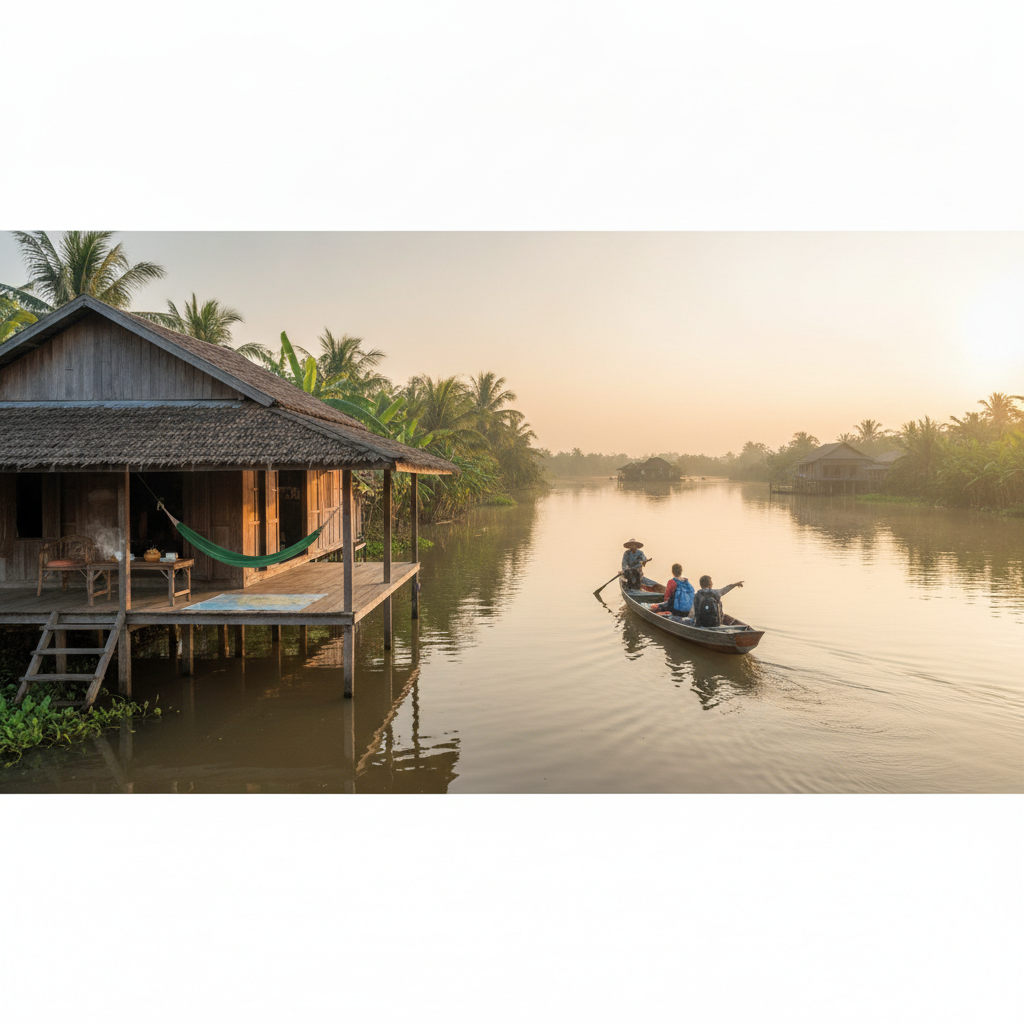
Accommodation moves are one of the most underestimated costs in budget travel — not just in money, but in time, energy, and the small fees that stack up every time you check out of one place and settle into another. The Mekong Delta, that sprawling web of rivers, rice paddies, and canal-laced towns in southern Vietnam, is a region most travelers rush through on a two-day organized tour from Ho Chi Minh City. That's a mistake worth correcting. Staying slow in one well-chosen base and running day trips outward from there is one of the most effective cost-cutting strategies the region offers.
Choose the Right Town as Your Central Anchor
Can Tho is the obvious candidate, and for good reason. It's the largest city in the delta, has reliable guesthouses at genuinely affordable rates, and sits within easy striking distance of floating markets, bird sanctuaries, and smaller canal towns. Vinh Long is a quieter alternative with cheaper accommodation and a slightly more central position for those wanting to reach the upper delta. Either town works as a base, but the principle is the same: pick one, negotiate a multi-night rate, and stop moving. A three-night stay in a single guesthouse almost always unlocks a lower nightly price than booking three separate single nights in three separate towns.
Negotiate the Weekly Rate Before You Unpack
Guesthouseholders and small hotel owners throughout Can Tho and Vinh Long expect negotiation, and they respond well to guests who commit to staying put. When you arrive and ask about a three-night or four-night rate upfront, you're giving them predictability — and that's worth a discount. This isn't aggressive bargaining; it's a simple, respectful conversation. Even a modest reduction on the nightly rate across three nights covers a day's worth of food or a hired boat trip. The savings aren't dramatic in isolation, but they compound against everything else you're cutting by not moving.
Use Local Xe Om and Boat Hire Instead of Tour Packages
Organized day tours out of Ho Chi Minh City bundle transportation, accommodation logistics, and a guide fee into one inflated price. When you're already based in Can Tho, those costs evaporate. You hire a boat directly from the riverside in the early morning — before the organized groups arrive — to see Cai Rang floating market at a fraction of tour pricing. For land-based day trips toward Tra Vinh or Sa Dec, xe om (motorbike taxi) drivers and local minibuses handle the distance cheaply. Apps like Grab work in Can Tho for shorter connections. Cutting the tour operator out of every day trip is where the real savings accumulate.
Eat Where the Locals Eat Near the Market District
Food in the Mekong Delta is one of the most pleasant budget surprises in Southeast Asia. A bowl of hu tieu (rice noodle soup) at a market stall in Can Tho costs a fraction of what the same meal runs at a restaurant catering to day-trippers. The morning markets near the Ninh Kieu waterfront have stalls running from around five in the morning, and eating early there sets a cheap, filling tone for the entire day before you head out. When you're based locally rather than passing through on a tour, you find these spots naturally — and you return to them, which compounds the savings across every day of your stay.
Plan Day Trips by Radius, Not by Popularity
The reflex in the Mekong Delta is to chase the famous stops — the floating markets, the coconut candy workshops near Ben Tre, the bird sanctuary at Bac Lieu. Those are all worth seeing, but planning by radius rather than by reputation keeps transportation costs controlled. From Can Tho, Ben Tre is a reasonable half-day trip by ferry and road. Bac Lieu is further and works better as a dedicated full day. Sa Dec, with its flower gardens and the house that inspired Marguerite Duras's *The Lover*, sits comfortably within a morning trip. Mapping your days by distance prevents expensive backtracking and double transport costs.
Skip the Air-Conditioned Minibus and Use Public Transport
Local buses and shared minivans connect Can Tho to most delta towns at a cost that makes private transfers feel absurd by comparison. The main bus station in Can Tho has routes running throughout the day to Vinh Long, Long Xuyen, and beyond. Yes, the journey takes longer. Yes, you'll share the ride with locals carrying bags of produce and the occasional live animal. That's not a downside — that's the actual experience of traveling through the delta, and it costs almost nothing. The time trade-off is real, but when you're sleeping in the same affordable bed every night, you're not burning time on check-ins and the logistical friction of constant movement.
Track What You're Saving Against the Alternative
The financial case for a slow base becomes clearest when you run the numbers against the alternative. Three nights in three different delta towns means three separate check-in fees, three sets of transport between accommodations, potentially three different meals at tourist-facing restaurants before you've found the cheap local spots, and the inefficiency of packing and unpacking repeatedly. That friction costs money every single time. Keeping a rough running tally — even just in a notes app — of what you'd have spent on accommodation moves helps reinforce the decision and keeps you from splurging elsewhere under the impression that you're saving nothing.
Build One Rest Day Into the Base Without Guilt
Budget travel loses its appeal fast when it becomes a relentless logistics exercise. Staying in one base long enough to have a genuine rest day — sitting by the river in Can Tho, reading at a café near the night market, doing genuinely nothing — is part of what makes the slow-base model sustainable. That rest day also tends to be the cheapest day of the trip. You're not paying for transport, not rushing through a market, not buying anything in particular. It resets your spending pace and keeps the overall trip cost lower than a constant-motion itinerary ever could.
The slow-base approach works because it treats travel like a system rather than a highlight reel. The Mekong Delta rewards that patience more than almost any region in Southeast Asia — the longer you stay in one place, the cheaper and richer the experience gets. Keep your base fixed, your day trips intentional, and your accommodation costs flat, and the delta delivers serious value without the budget pressure that comes from chasing every destination on a tight, expensive schedule.