There's a particular kind of travel disappointment that sets in slowly — the moment a destination you've dreamed about reveals itself to be expensive, crowded, and slightly less magical than the photographs suggested. The Amalfi Coast and Cinque Terre deliver beauty, certainly, but they also deliver peak-season pricing that strains even a generous travel budget, shoulder crowds that never quite thin out, and a kind of commercialized polish that makes genuine discovery feel distant. What most travelers don't realize is that a short flight or drive away, across the Adriatic, sits a peninsula that offers nearly everything those Italian coastlines are famous for — at prices that feel almost implausible by comparison.
The Geography of Good Value
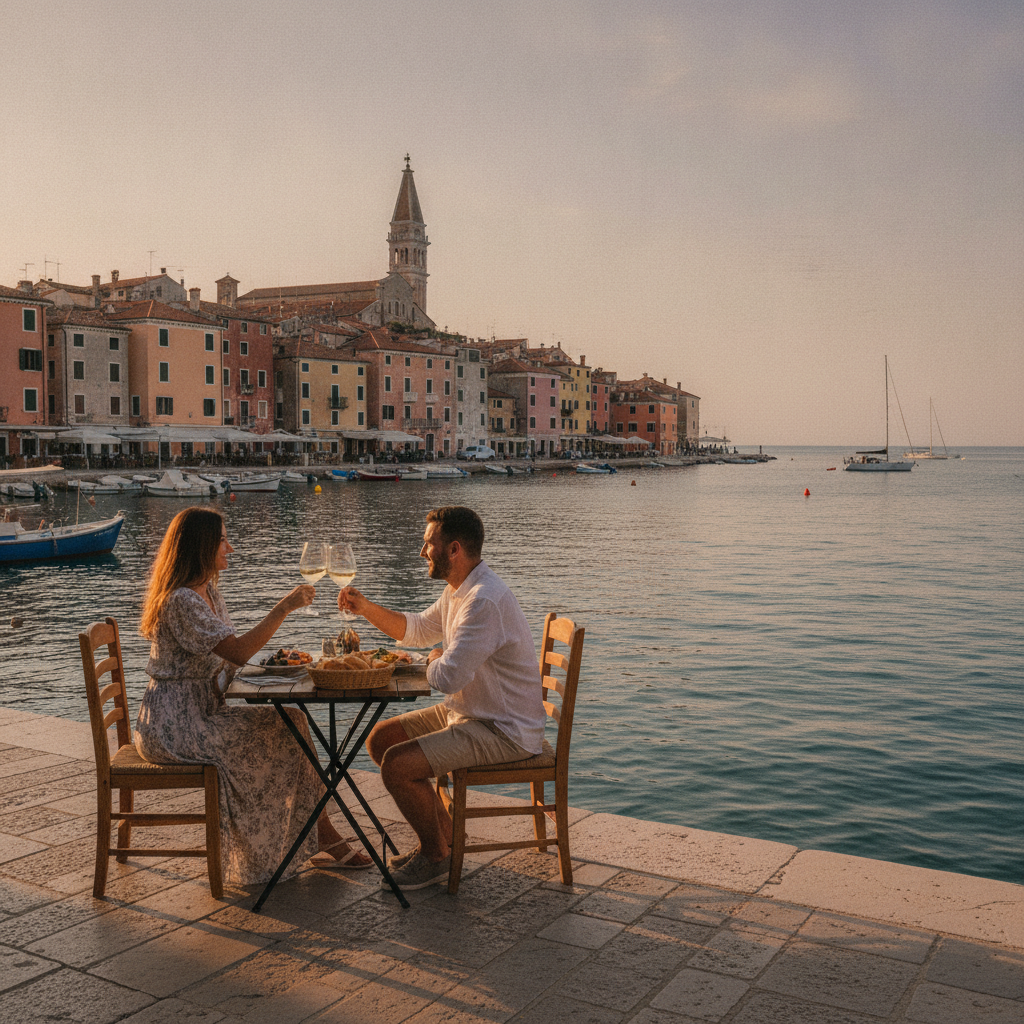
The Istrian Peninsula, shared primarily by Croatia and Slovenia with a small northern strip belonging to Italy, sits at the top of the Adriatic and has spent centuries absorbing Italian cultural influence. The architecture in towns like Rovinj and Poreč is unmistakably Venetian — stone campaniles, narrow harbor-front streets, faded ochre facades that catch the late afternoon light in exactly the way travel photographers spend hours chasing along the Ligurian coast. The cuisine follows the same logic: fresh seafood, hand-rolled pasta, truffles from the inland forests, and local wines that would cost considerably more if poured under an Italian label. The experience of sitting at a waterfront table in Rovinj with a glass of Malvazija and a plate of grilled branzino is, for most purposes, indistinguishable from what you'd find across the water — except that the bill arrives at a fraction of the price.
Late September is the specific timing that unlocks the region's best value proposition. The summer crowds that fill Rovinj's harbor through July and August have largely retreated by the final week of September, but the weather holds — daytime temperatures stay warm enough for swimming, the sea remains calm, and the light takes on that amber-tinged quality that characterizes the Mediterranean autumn. Accommodation prices, which spike sharply through peak summer, drop noticeably as soon as the school-holiday window closes in early September and continue softening through the month. Booking a well-reviewed apartment in the old town of Poreč in late September through Airbnb, for instance, routinely costs less than half what the same listing commands in August.
Practical Costs and Where to Look
The price gap between Istria and comparable Italian coastal destinations is most visible in accommodation and dining, but it extends across almost every category of travel spending. A seafood dinner for two at a mid-range restaurant in Rovinj will typically land well below what a similar meal costs in Positano or Monterosso al Mare. Local markets in the inland Istrian hill town of Motovun sell truffles, olive oil, and regional wine at prices that feel almost agricultural by comparison to what those same products fetch in Umbrian or Tuscan tourist shops.
For flights, the regional budget airlines that serve Croatia's smaller airports — including Pula, which sits at the southern tip of the peninsula and functions as the main gateway — make access affordable from most of Europe. Travelers coming from North America typically route through a major hub like Amsterdam, Frankfurt, or Vienna, where onward connections to Pula are short and inexpensive. Searching through Google Flights with the flexible dates option turned on often reveals meaningful price variation across the late September window, and setting a price alert on that route a few weeks out can capture short-lived fare drops that aren't visible at initial search. Skyscanner's price calendar view is equally useful for spotting which specific days in the last two weeks of September carry the lowest combined cost for outbound and return legs.
Once in Istria, ground transport between towns is manageable by local bus and surprisingly affordable. The journey from Pula to Rovinj takes under an hour and costs a few euros. Renting a car opens up the inland hill towns — Grožnjan, Motovun, and Oprtalj among them — which offer some of the quietest and most atmospheric afternoons anywhere on the peninsula, and where the complete absence of tourist infrastructure keeps prices firmly local. Apps like Booking.com and Hostelworld both carry solid inventories of smaller guesthouses and family-run agrotourism properties in this inland zone, which tend to offer exceptional value compared to the harbor-front options in the larger coastal towns.
Making the Comparison Work for Your Budget
The mental shift that makes Istria genuinely useful as a budget destination is treating it not as a compromise but as an active choice — a region that competes with coastal Italy on atmosphere and experience while sitting in an entirely different price category. Travelers who plan a week in Istria with the same attention they'd apply to a more famous destination tend to come away having spent significantly less while covering comparable ground: a working harbor, historic old towns, excellent regional food, clear Adriatic water, and countryside that rewards slow exploration.
Budgeting for such a trip rewards specificity. Building a rough daily spending target before booking — factoring in accommodation, meals, transport within the peninsula, and a buffer for market finds and wine — is far more useful than arriving with a vague ceiling. The free budget-tracker functionality inside Trail Wallet or a simple spreadsheet updated nightly keeps that daily number honest and prevents the gradual drift that tends to inflate trip costs when spending feels abstract. Late September's lower prices make the math more forgiving, but knowing where you stand each day means the whole trip lands where you intended it to.
There's a quiet satisfaction in discovering that the travel experience you wanted — unhurried coastline, good food, old stone towns, warm September light — was available the whole time at a price that didn't require months of financial sacrifice to reach. Istria delivers that experience with a consistency that rewards return visits, and late September delivers it at its most accessible. The travelers who make the comparison once rarely feel the need to overpay for the better-known version again.