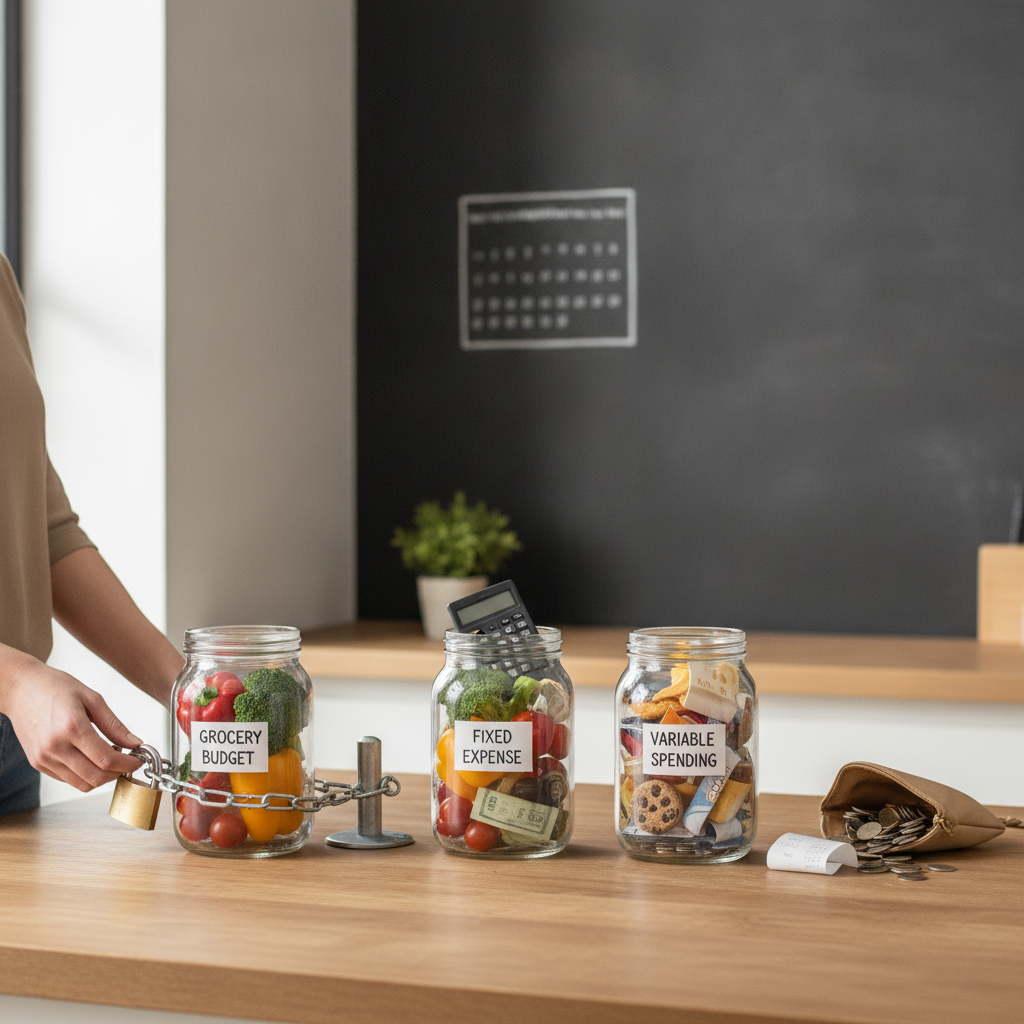
Grocery spending has a quiet reputation as the most elastic line in any personal budget — the category that expands or contracts without anyone quite deciding it should. Unlike a car payment or a utility bill, food costs carry no hard ceiling, no invoice, and no external accountability. That flexibility, which seems like a feature, tends to function more like a liability. When money is left over from other categories, groceries absorb it. When spending needs to be reined in, groceries seem like the logical place to start. The result is a budget line that never quite stabilizes and rarely reflects any deliberate intention.
The Difference Between Fixed and Variable Budget Categories
In standard personal finance frameworks, fixed expenses are those that don't change month to month — rent, loan payments, insurance premiums. Variable expenses shift based on behavior and circumstance: dining out, entertainment, fuel. Groceries almost universally land in the variable column, which is a reasonable classification on the surface. Food prices fluctuate, household size shifts, and weekly needs aren't perfectly predictable. But categorizing something as variable doesn't just describe it — it also signals to the brain that the number is negotiable in both directions, which is where the trouble begins for most budgeters.
How Variable Classification Creates Passive Overspending
When a category is mentally classified as variable, it tends to get managed reactively rather than proactively. A person checks what's left in their budget at mid-month and uses that remaining figure as permission to spend — or as a signal to restrict. This reactive approach means grocery spending often functions as a pressure valve rather than a planned category. Budget apps like YNAB and Mint frequently show grocery as one of the top categories where users exceed their own stated targets, not because the targets were unrealistic, but because the variable label creates a psychological tolerance for drift that fixed categories simply don't carry.
The Fixed-Expense Mindset and What It Actually Changes
Treating the grocery budget as fixed — deciding in advance that the number is set, not subject to month-end adjustment, and not available to absorb leftover cash from other categories — changes the relationship between intention and spending in concrete ways. When a figure like a mortgage payment or a Spotify subscription hits the account, people don't typically revisit whether to pay a little more or less based on how the month went. That same energy applied to groceries produces a different kind of discipline: the shopper plans around the number rather than letting the number trail behind the shopping. Meal planning, batch cooking, and store-brand substitution become natural responses to a constraint rather than optional strategies.
Why Grocery Spending Becomes the Month's Slack Absorber
Most household budgets contain a small amount of unallocated cash at month's end — money that didn't go to its intended category because a subscription paused, a bill came in low, or a planned dinner out didn't happen. That slack, if not deliberately redirected, tends to disappear into whichever budget category feels most flexible and most morally neutral. Food never feels like an indulgence the way a clothing purchase does, which makes it an almost invisible destination for unintended spending. A slightly larger grocery haul from Whole Foods or a few extra items at Trader Joe's each week doesn't register as overspending — it registers as responsible provisioning — even when it consistently runs well above the budget target.
Practical Steps for Locking the Grocery Number Down
The shift from variable to fixed treatment starts with establishing a realistic baseline, ideally drawn from a rolling average of several months of actual spending rather than an optimistic estimate. Once that number is set, the practical approach is to treat it like a bill: allocate it first, withdraw it as cash or transfer it to a dedicated account at the start of each month, and stop tracking it against other categories. Tools like a simple cash envelope system or a dedicated debit card tied to a Chime spending account work well precisely because they create a physical or structural boundary around the category. When the grocery envelope is empty, it's empty — not an invitation to pull from entertainment or discretionary funds. If the month comes in under target, the remaining balance rolls toward savings or a designated goal rather than getting quietly spent before the next cycle starts. You set the number, you protect it, and you route the surplus somewhere intentional.
The Long-Term Stability a Fixed Grocery Budget Provides
Over time, holding the grocery line as a fixed figure builds a kind of household spending discipline that extends beyond food. It trains the habit of deciding in advance what a category costs, building behavior around that number, and treating deviations as information rather than permission. Families who operate this way tend to find that their overall budget variance shrinks — not because they spend less on food necessarily, but because the largest flexible category in the budget has stopped functioning as a catch-all. The grocery figure becomes as predictable as rent, and that predictability, compounded across months and years, creates the kind of financial clarity that makes larger goals — an emergency fund, a travel budget, a debt payoff timeline — feel genuinely achievable rather than perpetually out of reach.
The observation that brought this issue into focus holds true across income levels and household types: the most damaging budget leaks are rarely the dramatic ones. They're the quiet, recurring, socially acceptable overspends in categories that carry no psychological resistance. Groceries sit at the center of that pattern. Reclassifying the category — not by changing the amount, but by changing the mental and structural relationship to it — is one of the most underrated moves in everyday personal finance.