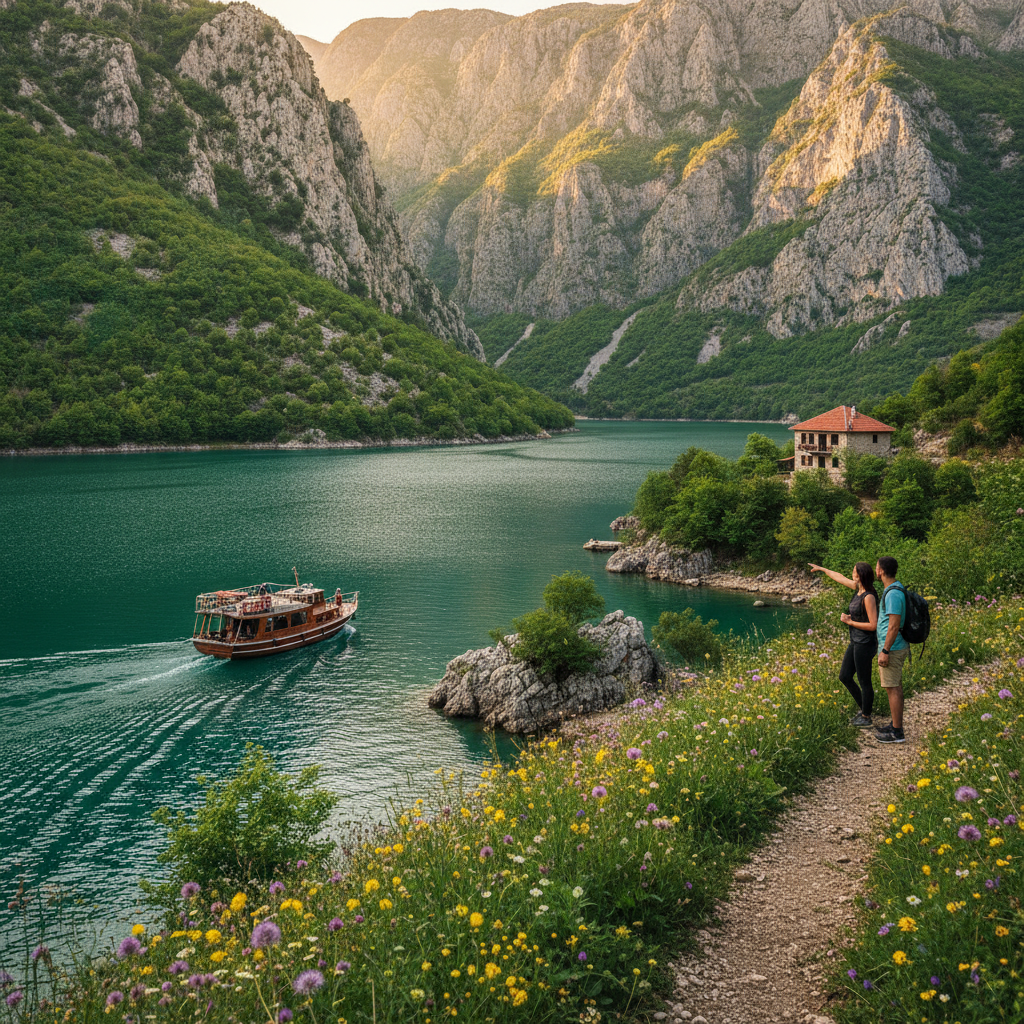
Some corners of Europe still operate on a pricing logic that feels like it belongs to a different decade. Northern Albania is one of them — and late May is the precise window where geography, weather, and cost all align in a way that won't stay this accessible for long.
The Geography That Makes This Window Worth Understanding
The Albanian Alps meet the Adriatic basin in a way that produces something genuinely unexpected: a series of glacially carved inlets near Koman and along the Shala River that locals and travel writers alike have taken to calling fjords. They're not Scandinavian in scale, but the effect — steep limestone walls dropping into still turquoise water, accessible by small ferryboats and footpaths — is dramatic in its own quieter way. The Komani Lake ferry, which runs through a gorge so narrow the water reflects the cliffs above, is one of the more visually striking overland routes anywhere in the Balkans, and it costs a few euros.
By late May, the snowmelt from the Accursed Mountains has settled into the river system, the light runs long into the evening, and the roads into Theth and Valbona are passable without four-wheel drive. You're arriving after the last of the cold but before the July and August crowds that have started discovering this region through hostel networks and budget travel forums. That gap — call it six to eight weeks — is where the value lives.
Why the Timing Matters More Than the Destination Itself
There's a consistent pattern across emerging Balkan destinations: prices track attention, and attention arrives with a lag. The Dalmatian Coast went through this years ago. Montenegro's coast followed. Now the attention is moving northward and inland — toward places like Shkodër, the guesthouses along the Valbona Valley, and the ferry routes that connect them. Late May sits just ahead of that inflection point each season. Accommodation that runs thirty or forty dollars a night in peak summer often comes in under twenty in the last two weeks of May, and guesthouses in Theth frequently have open beds without any advance booking required.
What You'll Actually Spend — and Where the Savings Come From
Albania's cost base is among the lowest of any European country with functioning tourism infrastructure. Meals in Shkodër — the northern gateway city — run two to five dollars at local restaurants. The ferry through Koman Gorge costs a few euros each way. Minibuses connecting the valley towns charge fares that feel almost symbolic by Western European standards. None of this requires sacrifice. The food is genuinely good: grilled lamb, fresh lake fish, byrek, and raki that guesthouses often pour as a welcome gesture.
For accommodation booking, Hostelworld surfaces the limited but growing number of budget beds in Valbona and Theth, while Booking.com tends to have better coverage of the guesthouse tier in Shkodër proper. Cross-referencing both in the weeks before departure gives you the clearest picture of availability and price spread. For the ferry itself, it's worth knowing that tickets are purchased at the dock — no app needed, no advance booking system — which is both charmingly informal and genuinely low-cost.
Stretching the Budget Across the Full Route
The standard routing through this region runs Shkodër to Koman by minibus, then the Koman ferry to Fierza, then another connection into Valbona for hiking, with an optional traverse over the mountain pass into Theth before returning south. The entire circuit can be done in four to five days and the transport costs, even when totaled, remain modest. That leaves your daily budget weighted toward accommodation and food — two categories where Albania still genuinely undercuts its neighbors.
Google Flights remains useful for getting into the region cheaply. Tirana's Mother Teresa International Airport receives low-cost carrier routes from several European hubs, and positioning flights from cities like Vienna, Rome, or London can be found at reasonable prices if booked four to six weeks out. From Tirana, Shkodër is about two hours north by furgon — the shared minibus system — for under three dollars.
The Window That's Worth Acting on Before It Closes
The pattern with regions like this is predictable. Coverage grows, social media attention follows, boutique operators move in, and the price floor rises to meet the new demand. The Osum Canyon to the south, Blue Eye near Sarandë, and the Riviera towns further down the Albanian coast have already seen this shift accelerate. The northern fjord and mountain circuit hasn't fully crossed that threshold yet — but the trajectory is clear.
Trail maps for the Peaks of the Balkans hiking route, which passes through this region, are now available through AllTrails, which has helped extend the discovery curve to hikers who wouldn't have known about Valbona or Theth five years ago. That's not a warning against going — it's the opposite. The infrastructure is improving, the paths are better marked, and English is increasingly spoken in the guesthouses. The conditions are genuinely good. The gap that remains is in pricing, and that gap closes gradually each season.
Late May rewards the traveler who plans a few weeks out rather than months. You don't need a rigid itinerary. You don't need a tour operator. What you do need is a rough sense of the ferry schedule, a couple of guesthouse contacts in Valbona, and a budget that's genuinely low by almost any standard. The scenery — those still inlets, the limestone walls, the mountain light at seven in the evening — delivers something that comparable regions in Western Europe charge several times more to access.
The northern Albanian fjords are in a particular moment right now: discovered enough to be accessible, not yet priced like a destination. That moment doesn't last indefinitely, but in late May, it's still very much here.