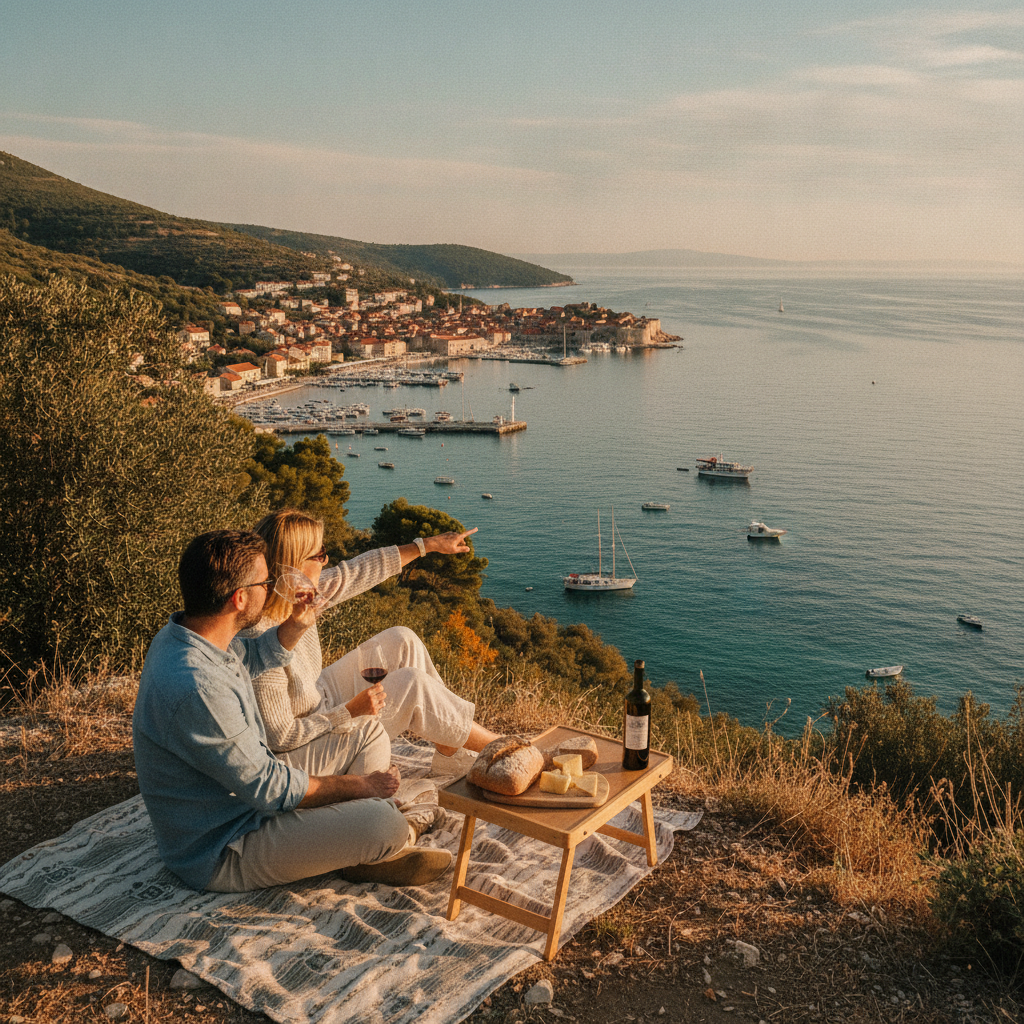
There's a specific kind of travel magic that only arrives when the last of the summer crowds have packed their bags and headed home. The Dalmatian Coast of Croatia sits in one of those rare seasonal sweet spots — a narrow window in early October when the Adriatic still holds enough warmth for swimming, the old stone towns glow under softer autumn light, and the prices that felt completely out of reach in July have quietly collapsed back to something reasonable. For budget-conscious travelers who've written Croatia off as too expensive, this window deserves a second look.
When the Calendar Does the Discounting for You
The economics of the Dalmatian Coast are almost entirely driven by the peak summer surge. Dubrovnik, Split, and Hvar see enormous visitor volume from June through August, and accommodation prices reflect that demand without apology. A private room in a centrally located guesthouse that costs well over a hundred euros a night in August can drop by forty to fifty percent in the first two weeks of October — not because the destination has changed, but simply because the season has.
This is one of the most reliable forms of travel discounting available, and it requires nothing more than adjusting your departure date by a few weeks. Shoulder season pricing on the Dalmatian Coast isn't a rumor or a fluctuation — it's a structural feature of how the local hospitality economy works. Properties need to fill rooms after the peak rush, and the urgency of late-season travel creates genuine flexibility that simply doesn't exist in summer.
Booking platforms like Booking.com and Hostelworld both show this pattern clearly when you compare the same property across dates. It's worth running those comparisons side by side before assuming a Croatian trip is out of budget — the difference between an August week and an October week is often significant enough to change the entire math of a trip.
What the Weather Actually Looks Like
October on the Dalmatian Coast is not cold. Average daytime temperatures in early October tend to settle in the low-to-mid twenties Celsius, with sea temperatures still warm enough for comfortable swimming through at least the first half of the month. The light changes in a way that photographers and casual walkers both notice — it turns golden earlier in the day, which makes the limestone walls of Dubrovnik's Old Town and the harbor fronts of Hvar look genuinely extraordinary.
Rain becomes a slightly more present consideration as October progresses, but early October remains largely dry and clear along the coast. Traveling in the first two to three weeks of the month means catching the tail of the Mediterranean summer without paying summer prices — a combination that's genuinely rare across European coastal destinations.
The Practical Side of Traveling the Coast Off-Peak
Beyond accommodation, early October brings meaningful savings across nearly every category of travel spending. Restaurants that were overloaded and overpriced in peak season have more tables available and more incentive to offer value. Ferry connections between islands — including the popular routes between Split and Hvar, and onward to Korčula — continue running on reasonable schedules through October, though it's worth checking timetables in advance as frequencies can reduce slightly.
For flights, Google Flights is the most effective starting point for identifying which departure dates offer the steepest drops in airfare. Flights into Split (SPU) are generally cheaper than Dubrovnik for budget travelers coming from elsewhere in Europe, and the coastal bus and ferry network makes it straightforward to work your way south toward Dubrovnik over several days without needing to fly into the more expensive gateway.
Car rental pricing also loosens considerably in October for those who want to explore the interior or reach smaller coastal towns that ferries don't serve. The roads along the Dalmatian coast are genuinely scenic, and renting a vehicle for two or three days to cover ground between ferry hops adds very little cost in the shoulder season compared to what those same rentals would run in high summer.
Building an Itinerary That Maximizes Value
The most cost-effective approach to the Dalmatian Coast in October involves treating one of the larger towns — Split is the practical choice — as a base for the first few days before moving south. Split's Diocletian's Palace is one of the most remarkable Roman structures in Europe and sits at the center of a fully walkable old town that costs nothing to explore. Accommodation in the surrounding neighborhoods runs meaningfully cheaper than the historic core itself, and the connections to nearby islands are straightforward from the main ferry terminal.
Hvar is worth at least one or two nights for the setting alone. In October, the famous summer party scene has quieted, and what remains is genuinely beautiful — lavender-scented hillsides, a striking harbor, and a pace that allows the town's architecture and landscape to actually register. Prices drop considerably compared to the summer peak, and the island feels like a different place when it isn't overrun.
Korčula, further south, is quieter still and often overlooked by travelers who run out of time. The medieval old town on its small peninsula is one of the more underrated spots on the entire coast, and October accommodation rates here are among the lowest you'll find anywhere on a Croatian island with this level of genuine character.
A Window That Won't Stay Open Forever
The Dalmatian Coast's shoulder season advantage has been slowly compressing as Croatia's profile as a year-round destination grows. Dubrovnik in particular has seen its off-peak periods shortened by steady increases in tourism interest, and what was once a reliably quiet October is now busier than it was five years ago. The early October window still delivers real value in 2026, but the gap between peak and shoulder pricing has narrowed somewhat in Dubrovnik compared to the rest of the coast.
That trajectory suggests the smartest move is acting sooner rather than later. Travelers who lock in plans for early October — using Skyscanner to set fare alerts and Booking.com to monitor accommodation rates over the summer — will find the best combination of price and availability. The coast's beauty in autumn is not in question; the only variable is how long the pricing gap that makes it accessible to budget travelers continues to hold. Right now, it still does — and the window is worth using.