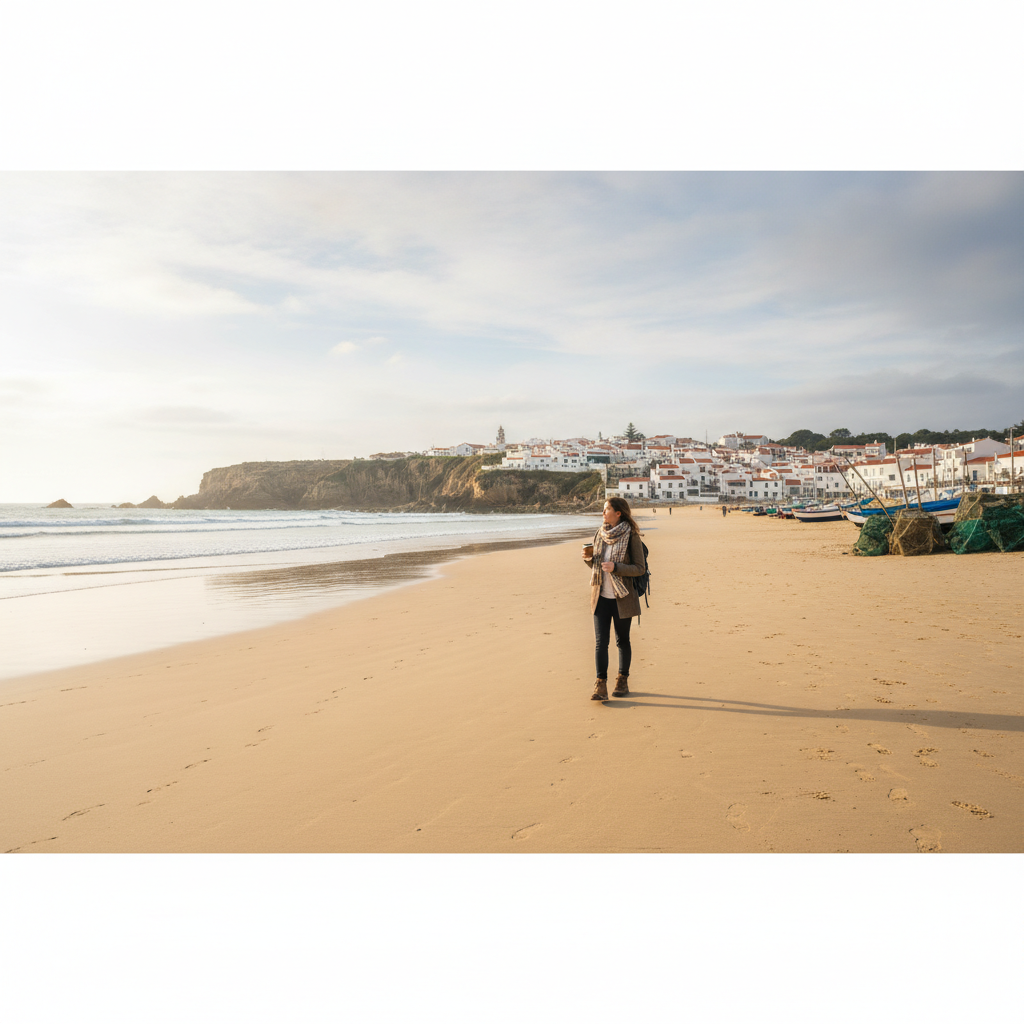
There is a particular kind of travel that doesn't announce itself on social media or trend in travel roundups — it simply rewards the people quiet enough to notice it. Coastal Portugal in late winter is exactly that kind of travel. While much of Europe sits under gray skies and inflated city-break prices, the Atlantic coast between Lisbon and the Algarve occupies a strange, generous middle ground: mild enough to walk freely, empty enough to breathe, and priced in a way that would make a careful traveler feel genuinely fortunate.
This isn't about roughing it or settling for less. Portugal's coastal towns have good food, strong coffee, remarkable architecture, and a culture that has never been particularly interested in performing itself for outsiders. That combination — authenticity and affordability — is increasingly rare in European travel, and late winter is the window when both qualities are most fully available.
When the Off-Season Actually Works in Your Favor
Most budget travel advice centers on shoulder season: the weeks just before or after peak summer crowds. Portugal does have a shoulder season, but late winter — roughly mid-January through early March — operates differently. It's not merely quieter than July; it's a different country entirely. The fishing towns along the Costa Vicentina slow to their own rhythms. Seafront restaurants that would have a forty-minute wait in August seat you immediately, and the owner might sit down to talk.
Flights from most European hubs into Lisbon's Humberto Delgado Airport drop considerably during this window, and accommodation prices in coastal towns like Ericeira, Setúbal, and the western Algarve can fall by a third or more compared to summer rates. For a short trip — four to six nights — those savings compound quickly across transport, lodging, and daily spending.
The weather deserves honest attention. Late winter along the Portuguese coast is rarely cold by northern European standards, but it is variable. Weeks of warm, clear afternoons can give way to days of Atlantic rain without much warning. That variability is, paradoxically, part of what keeps prices down and crowds thin — and for a traveler who packs a waterproof layer and holds plans loosely, it's a minor inconvenience at worst.
The Cultural Texture That Makes It Worth the Trip
Portuguese coastal culture carries the weight of the sea in a way that feels genuine rather than decorative. In towns like Nazaré, the tradition of the *xaile* — the heavy black shawl worn by older women against the ocean wind — still appears in daily life, not just in tourist photographs. The concept of *saudade*, that untranslatable mix of longing and melancholy and love for what has passed, runs through everything from the fado music heard in Lisbon's Alfama district to the way old men at a harbor café watch the water.
For a budget traveler, this cultural depth matters practically as well as emotionally. Towns with genuine local culture tend to have genuine local economies — small family restaurants, municipal markets, bakeries that have no interest in premium pricing. A *prego* (a simple steak sandwich on a soft roll) eaten at a counter in a side-street café costs a fraction of what a similar meal would cost in a tourist-facing establishment in the same city. Knowing what to look for, and where, is most of the skill.
The *mercado municipal* in any coastal town is worth a morning. These covered markets sell fresh fish, vegetables, cheese, and bread at prices that assume the buyer is a local — because most of them are. Picking up lunch ingredients here and eating on a sea wall is not deprivation. It's one of the better meals available.
Practical Spending Habits That Stretch a Short Trip Further
Portugal already sits at the more affordable end of Western European pricing, and late winter pushes that advantage further. The practical moves that experienced budget travelers make here are straightforward, not exotic.
Accommodation is the largest variable. Coastal guesthouses and *pensões* — the Portuguese equivalent of a small family-run inn — offer clean, comfortable rooms at prices that haven't followed the trajectory of larger hotels. Booking directly with these properties rather than through major platforms sometimes yields a small discount; owners prefer to avoid commission fees, and a polite email inquiry can open that conversation.
Ground transport along the coast is well covered by regional trains and the *Rede Expressos* bus network, which connects coastal towns to Lisbon efficiently and cheaply. Renting a car adds flexibility but also adds cost — in late winter, when crowds are absent, the flexibility is less necessary than it would be in summer. The train from Lisbon to Faro, for instance, runs reliably and offers views of the Tagus estuary and the southern plains that a highway doesn't.
Food costs stay low if spending follows local patterns rather than tourist ones. The *prato do dia* — the dish of the day, usually a generous plate of fish, meat, soup, and bread — appears on blackboards at lunch in working restaurants across the coast. It's the best-value meal in Portugal and often the best-tasting one.
What to Watch For as Portugal's Profile Rises
Portugal has been noticed. Remote workers, retirees from northern Europe, and a growing wave of digital nomads have raised the profile — and in some areas, the prices — of cities like Lisbon and Porto considerably. That pressure is moving gradually outward toward the coast, and the late-winter pricing window that exists now may narrow over the next few years as year-round tourism becomes more evenly distributed.
For the traveler who has been considering coastal Portugal and keeps waiting for a better moment, late winter right now is close to the best that window will get. The towns are quiet, the prices are honest, and the sea, gray and enormous in February, has a quality that warmer, busier months simply can't replicate. Some of the most affordable trips are the ones that ask you to arrive slightly before everyone else has decided it's worth going — and in coastal Portugal, that moment still exists.