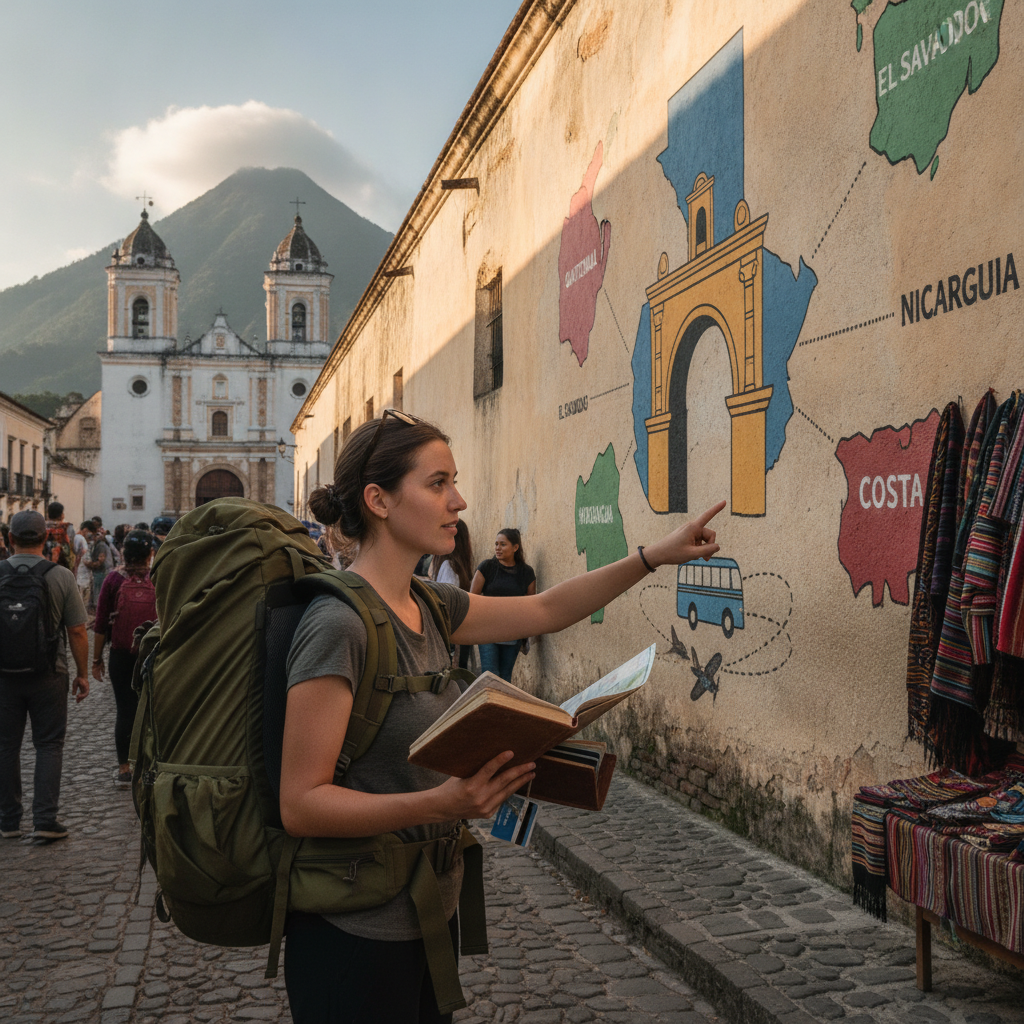
Central America is one of the few places on earth where you can stand in one country in the morning and reach three or four others by land before nightfall. The region's countries are small, geographically compact, and connected by a well-worn network of buses, shuttles, and border crossings that budget travelers have been using for decades. If you anchor yourself in one well-positioned city and treat it as your base, you can radiate outward into Guatemala, Belize, Honduras, Nicaragua, and Costa Rica without touching another flight. It's a simple strategy that cuts travel costs dramatically while keeping your trip flexible.
Choose Your Hub City Strategically
Not all cities are equal when it comes to overland access. Guatemala City, San José, and Panama City all have international airports with reasonably priced connections from North America — but they're not all equally positioned for regional movement. Guatemala City and nearby Antigua sit at a natural crossroads for reaching Belize, Honduras, and southern Mexico. San José works well if your trip leans southward toward Panama. Think about which countries you want to visit most, then pick the hub that puts you closest to the center of that cluster. Getting this right at the start saves you backtracking costs later.
Book One Round Trip Into and Out of the Same Airport
The core savings of the hub strategy come from booking a single round-trip international flight rather than a multi-city itinerary or a string of one-ways. Flying into Cancún or Guatemala City and flying home from the same airport almost always costs less than open-jaw tickets. Once you're in the region, overland travel handles everything in between. A direct bus from Antigua to the Honduras border, for example, costs a fraction of what any budget airline charges for the same route — and you don't lose a half-day to airport security theater on both ends.
Use Shuttle Services for Comfort, Buses for Deep Savings
The debate between tourist shuttles and local chicken buses has a practical answer: it depends on the route and your time. Shuttle companies like Tica Bus and Hedman Alas run comfortable, reliable services between major cities across the region, and they handle border crossings with less confusion for first-timers. Local second-class buses are dramatically cheaper but slower and better suited to routes you're comfortable with. A reasonable approach is to take local buses for short legs and book shuttles for longer overnight stretches where comfort actually matters for your sleep and energy the next day.
Pick an Accommodation Base That Rewards Returning Guests
When you're treating one city as a hub, your accommodation relationship matters more than on a typical trip. Hostels and guesthouses in Antigua and Granada, Nicaragua often offer returning guest discounts or will store your main bag while you take shorter trips. This means you pack a small daypack for two or three nights away and come back to a bed you've already arranged. You avoid paying for storage, avoid dragging everything across borders, and often get a slightly better rate for booking multiple non-consecutive nights with the same property.
Plan Your Loops Around Border Crossing Hours
Central American land borders vary wildly in terms of hours, wait times, and general organization. Some crossings between Guatemala and Belize or Honduras run smoothly during morning hours but get congested in the afternoon. Others are best avoided on weekends. Spending twenty minutes researching the specific crossing you're using — through recent traveler forums on platforms like iOverlander or Lonely Planet's Thorn Tree — can save you hours of standing in the wrong line. Timing your outbound trips to hit borders mid-morning and planning return trips to arrive back at your hub before dark is a simple habit that prevents unnecessary stress.
Keep a Budget Buffer for Border Fees and Surprise Costs
Nearly every Central American border crossing involves some combination of entry fees, exit taxes, fumigation charges, and occasionally unofficial facilitation fees that aren't worth arguing about in a slow-moving line. These costs are real and add up across multiple crossings. Building a modest cash buffer into your trip budget — kept separate from your daily spending money — means these fees never derail your plans. Dollars are widely accepted at most crossings, and having small bills on hand makes the whole process faster. ATMs inside border zones often charge steep fees, so withdrawing before you go is a reliable move.
Time Your Regional Trips Around Weather Windows
Central America has a dry season and a rainy season, and they don't hit every country identically or at the same time. The Pacific coast of Costa Rica, the highlands of Guatemala, and the Caribbean coast of Belize all behave differently. If you're basing yourself in Antigua during the dry months between November and April, short trips to Tikal or Lake Atitlán work in almost any weather. Trips to Caribbean-facing destinations like Honduras's Bay Islands or Belize's cayes are better planned around drier windows in those specific microclimates. Checking local weather patterns for each side trip — rather than just the hub — keeps you from arriving somewhere during its worst week.
Track Your Spending Per Country, Not Per Day
One underused habit for multi-country trips is tracking what each destination actually costs you as a unit, not just averaging everything together. Nicaragua tends to run cheaper than Costa Rica. Belize, despite being geographically tiny, is one of the more expensive countries in the region because of its dollar peg. Keeping rough notes on what each leg of the trip costs — transport, accommodation, food, entry fees — lets you adjust on the fly. If Belize comes in high, you might trim a night there and add it back in a cheaper destination. The hub strategy gives you the flexibility to make those calls as you go.
As overland travel infrastructure in Central America continues to improve, the hub city approach is likely to get even more practical. More shuttle routes, better border crossing apps, and expanding hostel networks are all making it easier to build smart regional itineraries without ever touching another airport. The basic logic isn't going away: one flight, one base, many countries — and a trip budget that stays intact from start to finish.