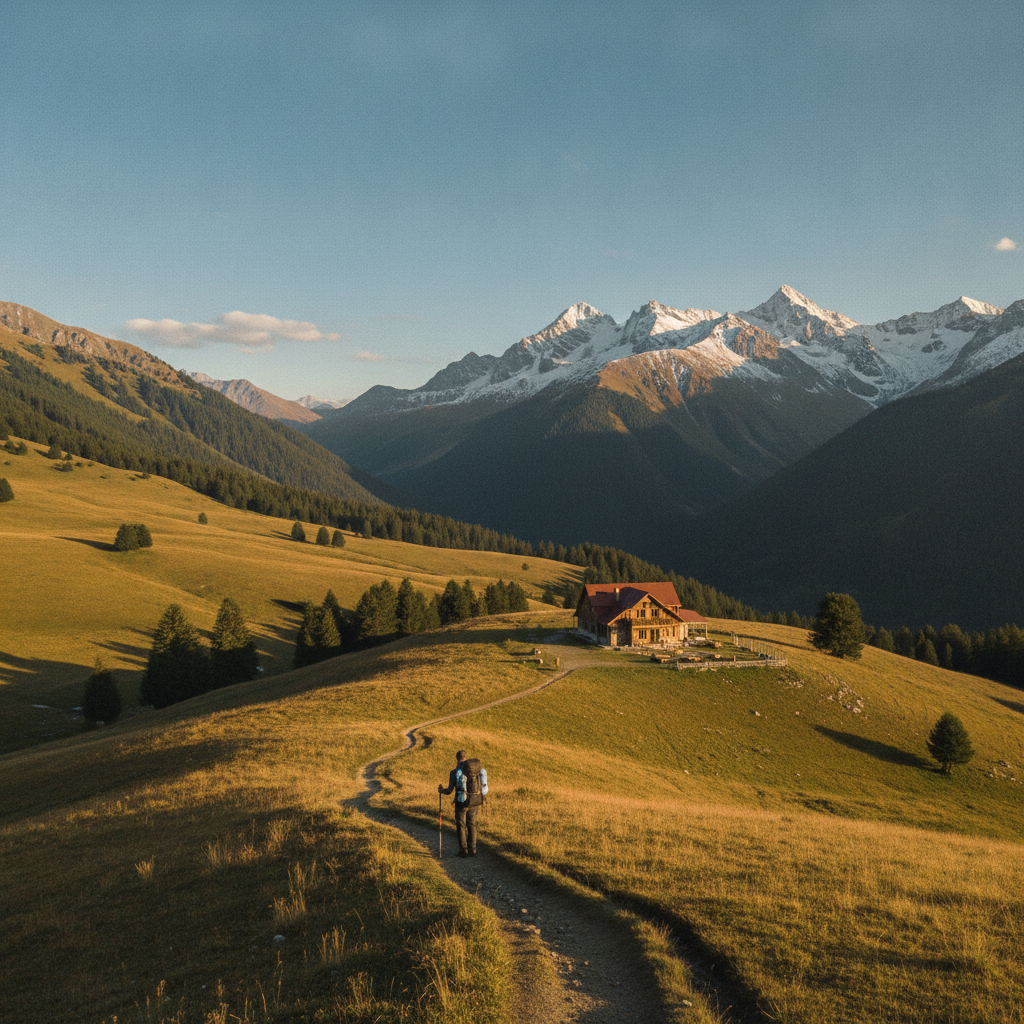
There's a particular kind of travel timing that doesn't get discussed often enough — the moment when a region's reputation has started to grow but its prices haven't yet followed. The Caucasus sits in exactly that position right now, and early September is the sharpest edge of that opportunity. Georgia, Armenia, and Azerbaijan have accumulated genuine international buzz over the past few years, drawing hikers, food lovers, wine enthusiasts, and slow travelers looking for somewhere that still feels unhurried and genuinely affordable. But the infrastructure of mass tourism — the price increases, the booking surges, the crowded trailheads — hasn't fully arrived yet. That window won't stay open indefinitely.
The Weather Logic That Makes September the Right Month
The Caucasus in early September occupies a sweet spot that few other regions in Europe or Central Asia can match at the same time of year. The brutal heat of July and August has broken, particularly in the lowland cities of Tbilisi and Yerevan, where summer temperatures can push into genuinely uncomfortable territory. Mountain regions like Kazbegi and the Dilijan forests of Armenia shift from summer crowds into a quieter, cooler register — warm enough during the day for hiking in a light layer, cool enough at night to sleep well without air conditioning. Rainfall remains low through most of the month, which matters enormously for anyone planning to spend time on trails or driving through mountain passes. The conditions are stable in a way that shoulder seasons in wetter climates simply can't guarantee.
Reading the Mountain Conditions Before You Go
For anyone planning to spend time at altitude — the Juta valley in Georgia, the roads around Stepansminda, or the higher trails above Dilijan — checking conditions through apps like Windy or Mountain Forecast in the week before departure can make a real difference in how you structure your days. Early September rarely brings snow at the passes, but temperatures drop quickly after sunset, and an extra day of flexibility on either end of a mountain segment costs very little when accommodation is this affordable.
Accommodation Prices That Still Reflect Last Year's Awareness
Pricing in the travel industry tends to lag behind reputation by a year or two, and the Caucasus is currently living inside that lag. Guesthouses in Kazbegi that charge a fraction of what a comparable alpine property in Slovenia or the Austrian Tyrol would cost are still abundant and bookable with very little lead time in early September. The same dynamic holds in Yerevan's Kentron neighborhood, where small boutique hotels and well-reviewed guesthouses remain genuinely cheap by any European standard. Booking platforms like Hostelworld and Booking.com both show strong inventory across the region in this window, with availability that would be unthinkable in a more established destination at the same time of year. The prices haven't caught up because the volume of visitors hasn't yet forced them to.
Timing Your Booking Without Over-Planning
One of the practical advantages of traveling to a less saturated destination is that you don't need to book weeks or months out to secure good accommodation at a fair rate. In early September, locking in your first two nights in each city through Booking.com and leaving the rest flexible allows you to adjust based on how you're moving through the region. That flexibility itself has value — it lets you extend a stay in a guesthouse you love, take a spontaneous day trip to a monastery or wine region, and avoid the rigidity that over-planned trips often create.
Trails Without the Crowds That Summer Brings
The hiking in the Greater Caucasus mountain range is legitimately world-class, and the trails around Stepantsminda and the Svaneti region of Georgia have earned their international reputation honestly. But July and August bring enough visitors to make popular routes feel busier than they used to, with guesthouses in Mestia filling weeks in advance and the trail to Gergeti Trinity Church seeing steady foot traffic throughout the day. Early September changes that equation meaningfully. Most of the summer travelers have returned home, school schedules have pulled families back, and the trails thin out in ways that make the experience qualitatively different — quieter, more personal, easier to pace at your own rhythm. The mountains don't change; the crowd density does.
Using Google Maps and AllTrails to Plan Realistically
AllTrails has reasonable coverage of the main routes in Georgia and is worth checking for trail condition notes left by recent hikers. Google Maps remains the most reliable tool for understanding distances between villages and estimating drive times on mountain roads, which can be deceptively long. Building a rough itinerary using both tools before you leave gives you a realistic sense of what's achievable without over-scheduling days that should stay loose.
The Food and Wine Argument for Coming Now
Early September in Georgia also lands at the beginning of Rtveli — the traditional grape harvest — which makes the wine regions of Kakheti particularly rewarding to visit. Family-run guesthouses in villages like Sighnaghi open their cellars to visitors, offer meals built around whatever's fresh, and charge rates that make the entire experience feel almost absurdly good value. Georgian food is among the most interesting and satisfying in the region — khinkali, churchkhela, fresh bread from a tone oven — and it's almost uniformly cheap even in the capital. Armenia's food culture is equally compelling, and Yerevan's restaurant scene punches well above its price point. This is the kind of eating that travelers pay significantly more for in Western Europe and get significantly less.
How to Build the Trip Without Overspending on Logistics
Flights into Tbilisi from major European hubs remain reasonably priced in early September, with Google Flights offering the most reliable comparison view across carriers. Once in the region, marshrutka minibuses connect most major destinations for very little money, and shared taxis fill the gaps where public transport thins out. Budget apps like Trail Wallet help track daily spending across countries where currency switching between the Georgian lari, Armenian dram, and Azerbaijani manat can make it easy to lose a sense of your actual daily rate. Keeping a simple running total — even just in the notes app on your phone — prevents the gradual drift that happens when cash-based travel makes spending feel less real.
The window that the Caucasus is currently sitting in — growing reputation, stable September weather, affordable accommodation, empty trails — is the same window that other regions once occupied before prices climbed and crowds arrived. That moment passed for the Balkans in certain seasons, for parts of Southeast Asia, and for corners of Eastern Europe that are now firmly on the mainstream circuit. The smart move is recognizing the window while it's still open, building a realistic budget, and booking the first few nights before early September fills in at the edges.