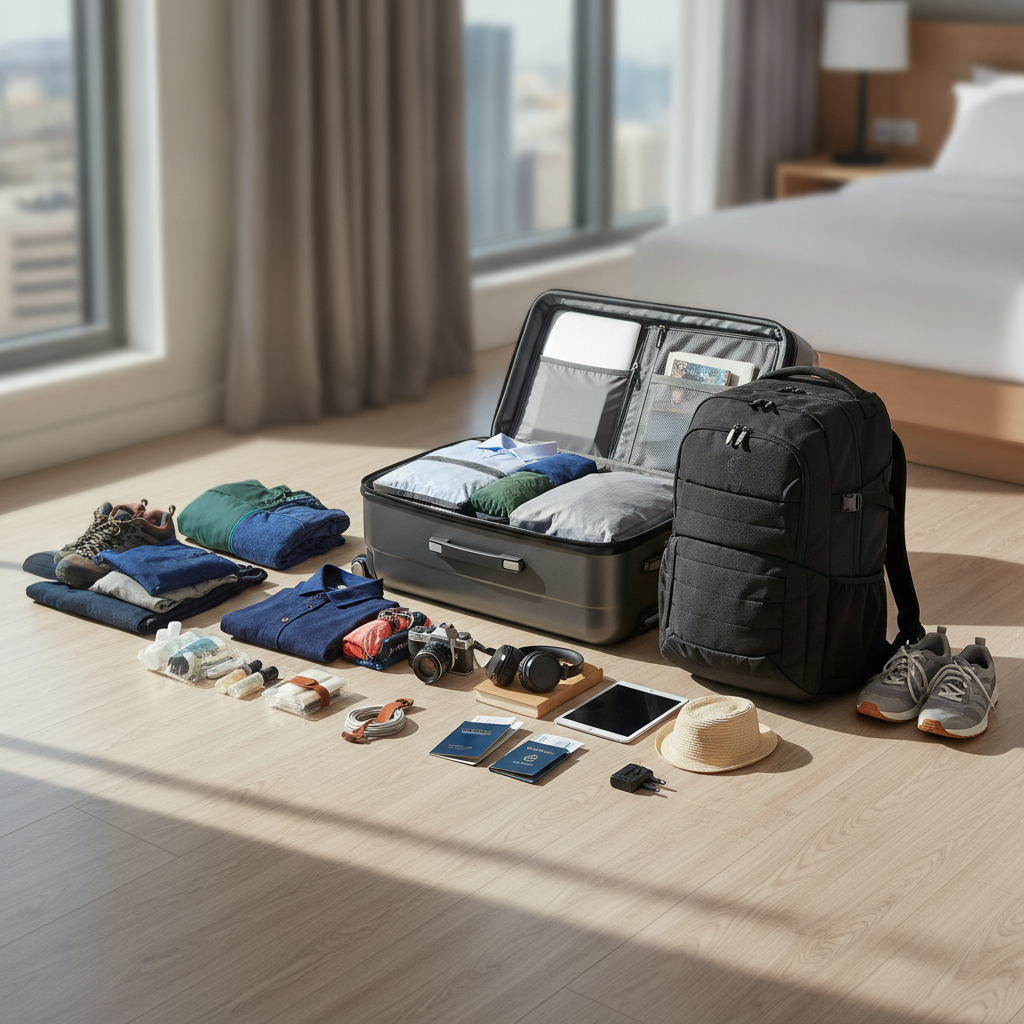
Checked bag fees have quietly become one of the most consistent ways airlines extract extra money from travelers who haven't built a smarter system yet. What used to feel like a minor surcharge has compounded into a real budget line — round trips on carriers like Spirit or Frontier can add up fast, and even legacy airlines now charge enough to meaningfully dent a travel budget. The good news is that carry-on-only travel isn't just for minimalists or weekend warriors. With the right approach, you can pack for a beach trip, a business week, or a cold-weather city break without ever touching a baggage carousel.
Choose the Right Bag Before Anything Else
The foundation of a carry-on-only system is the bag itself, and most people underestimate how much the wrong bag will cost them. A 40-liter backpack that fits within most airline personal item or carry-on dimensions — think something like the Osprey Farpoint 40 — gives you enough volume without pushing into checked territory. Hard-sided rollers can work, but they tend to eat usable space with their rigid structure. Measure before you buy, and cross-reference the dimensions against the specific airlines you fly most often, because the rules vary more than most travelers realize.
Build Around a Capsule Wardrobe, Not Outfit Options
The biggest packing mistake most people make is packing for options instead of packing for combinations. A capsule approach means choosing five to seven clothing pieces in neutral tones that genuinely mix and match with each other, so every item earns its spot through versatility rather than novelty. Dark jeans, a couple of lightweight tops, one layer that works for both chilly nights and dressy occasions, and a pair of shoes that handles walking and dinner — that's the core of a week-long wardrobe. You're not limiting yourself; you're just being intentional about what actually gets worn versus what gets carried.
Master the One-Bag Rule for Shoes
Shoes are where carry-on packing attempts typically collapse. They're bulky, they don't compress, and the temptation to pack three pairs for a ten-day trip is real. One pair of versatile shoes — something like an all-black sneaker or a neutral leather shoe depending on the trip type — worn on travel days will carry you through most itineraries. If your trip genuinely requires a second pair, like hiking boots for a mountain excursion, wear the bulkier pair at the airport and pack the lighter one. That's not a trick; it's just smart use of what you're already doing.
Use Packing Cubes to Control Volume, Not Just Organization
Packing cubes earn a permanent place in a carry-on system not because they help you organize, but because they help you compress and contain. Brands like Eagle Creek make compression cubes that actively reduce the volume of soft items like shirts and underwear, which frees up meaningful space for harder goods. The real discipline is this: if you fill a cube and it doesn't close easily, something comes out. The cube acts as a physical constraint that prevents the slow creep of overpacking that happens when you're working with open bag space.
Think in Layers for Cold-Weather and Multi-Climate Trips
Cold-weather destinations are the most common reason people abandon carry-on-only plans and reach for a larger bag. The solution isn't fewer warm clothes — it's smarter layering. A lightweight merino wool base layer, a mid-layer fleece, and one packable down jacket from a brand like Uniqlo can cover a surprisingly wide temperature range without taking up much space. Merino wool in particular earns outsized value in a travel wardrobe because it resists odor, dries quickly, and feels presentable enough to wear in a restaurant. One piece doing three jobs is the entire philosophy in practice.
Rethink Toiletries as a Weight and Volume Category
Toiletries routinely claim more space than they deserve, and for trips of a week or less, the math rarely justifies full-size anything. Solid toiletries — shampoo bars, solid conditioner, travel-size sunscreen — eliminate the liquid bag juggling entirely and take up a fraction of the space. For longer trips, you can resupply at a local pharmacy almost anywhere in the world, and buying a small bottle of shampoo in Lisbon or Bangkok is usually cheaper than checking a bag to carry one from home. Treating toiletries as a local purchase rather than a packing requirement changes how you think about the whole category.
Account for Souvenirs Before You Leave Home
One of the most overlooked failure points in carry-on-only travel is the return trip. You pack efficiently going out, then acquire things along the way and face a stuffed bag and a hard choice at the departure gate. The fix is to leave deliberate space on the outbound trip — pack slightly under capacity and bring a lightweight packable tote bag that folds flat. If you end up buying more than fits, that tote serves as a personal item on the return. Planning for what you'll bring back is part of the system, not an afterthought.
Know the Fee Structure of Every Airline You Book
All carry-on policies are not equal, and budget carriers in particular have tightened their rules around what counts as a free personal item versus a carry-on that triggers a fee. Ryanair, for example, has policies that catch travelers off guard when they book through a basic fare tier. Before every trip, check the specific bag dimensions and fee structure for your ticket class on each leg of your journey. Booking through Google Flights or directly through the airline's site makes it easier to compare what's actually included at each fare level before you commit.
The trend toward carry-on-only travel is only growing as airlines continue adjusting their fee structures and more travelers wise up to what checked bags actually cost over a year of regular flying. Bag technology keeps improving — lighter materials, smarter compression, and better organization systems are making it easier to pack less without sacrificing comfort. If you build this system once, refine it over a trip or two, and stay disciplined about what earns a spot in the bag, you'll stop paying fees that were always optional — and you'll move through airports faster every time.