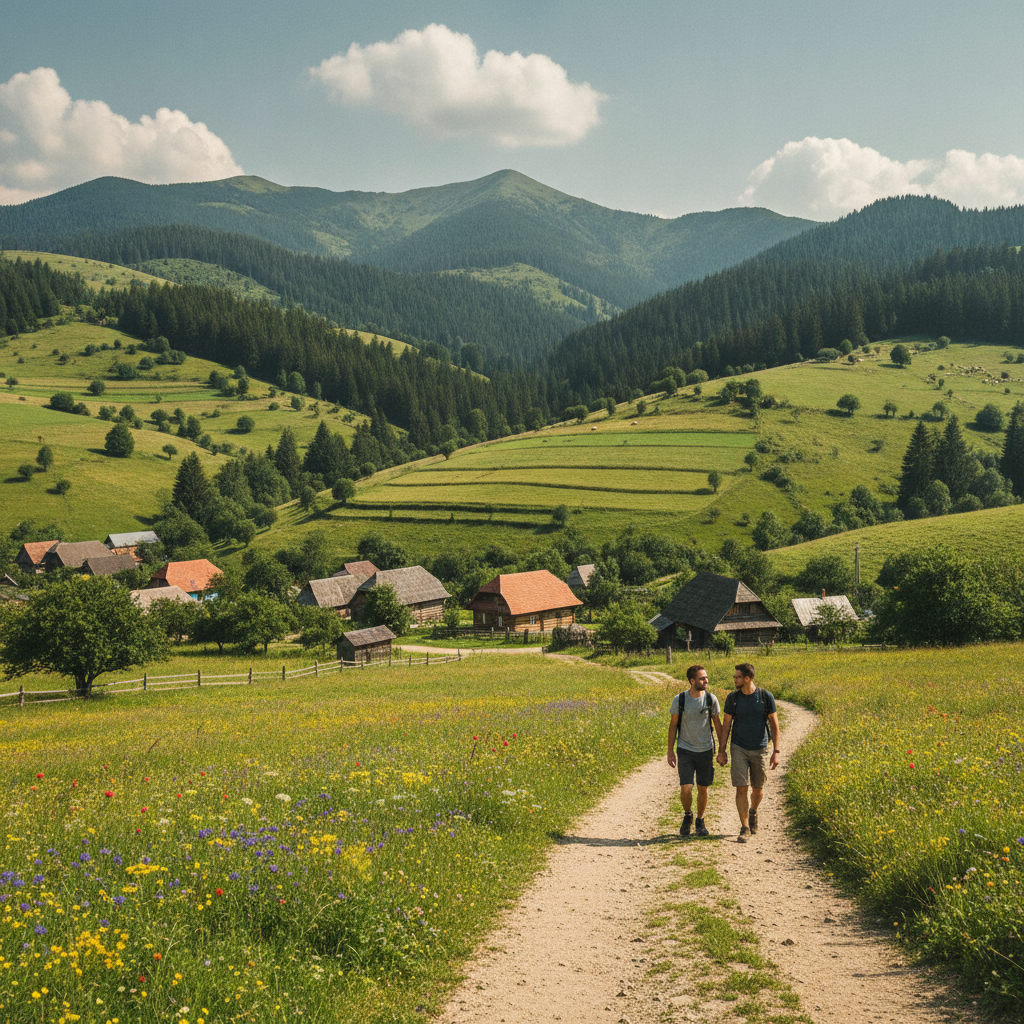
There's a particular kind of traveler who has spent years watching the Alps grow more expensive — watching Swiss village guesthouses climb past luxury hotel rates, watching the Dolomites fill with reservation-only trails and peak-season surcharges that arrived quietly and never left. For anyone who still wants mountain air, forested ridgelines, and slow mornings in a wooden-beamed room without a budget-destroying bill at the end of it, Romania's Carpathian region in late June has become one of the most quietly compelling alternatives left on the European map.
The Value Window That Opens in Late June
Late June sits in a sweet spot that budget travelers rarely exploit in Romania. The winter ski crowds are long gone, the summer holiday rush from Bucharest and Cluj hasn't fully arrived yet, and international tourism — though growing — hasn't caught up with what this corner of Central Europe actually offers. Accommodation prices in villages like Bran, Moeciu de Sus, and the Apuseni foothills remain substantially lower than comparable mountain destinations in Austria or Slovenia, and the guesthouses that fill those valleys tend to be family-run operations where breakfast is included, the portions are generous, and a full night's stay often costs less than a single meal in Chamonix.
The weather cooperates well during this window, too. Temperatures in the Carpathian highlands run cool in the mornings and warm in the afternoons, making hiking conditions genuinely comfortable without the heat that pushes into mid-July. Wildflowers are at their peak across the sub-alpine meadows, trail conditions are dry, and the long northern European daylight hours mean there's more usable time in each day than the same trip taken in October would offer. Timing a visit to land between June 20 and July 5 tends to capture the best of both the shoulder pricing and the seasonal conditions.
For planning purposes, **Google Flights** is worth watching consistently in the six to eight weeks before departure. Bucharest's Henri Coandă Airport receives budget carrier routes from across Western Europe, and fares on those routes can shift considerably week to week. Setting a price alert through Google Flights for flights into Bucharest and cross-referencing with **Skyscanner's** monthly calendar view gives a clearer picture of where the actual fare floor sits, rather than booking the first reasonable price that appears.
Finding Accommodation Beyond the Booking Algorithm
Most Carpathian village accommodation doesn't sit prominently in standard search results because the properties are small, independently managed, and often listed on regional platforms before they appear on international ones. **Booking.com** does carry a reasonable selection of Carpathian guesthouses — particularly around Sinaia, Busteni, and the Bran valley — but filtering for properties with fewer than ten rooms and sorting by guest rating rather than popularity tends to surface the family-run pensiuni that represent the region's best value. These aren't budget hostels; they're proper guest rooms with home-cooked dinners available on request, and they price accordingly for what they are, which in Carpathian terms still means spending a fraction of what a mid-range hotel in the Swiss Bernese Oberland would cost for the same night.
The villages themselves reward slower movement. Spending three or four nights in a single base rather than moving daily keeps costs lower, eliminates the logistics of constant check-in and check-out, and allows for the kind of morning trail access that packaged tours can't replicate. The area around Predeal and the Bucegi massif is particularly well-suited to this approach — a single guesthouse base puts multiple day-hike routes within walking distance, reduces transport costs to near zero for most of the stay, and lets the rhythm of a mountain village replace the constant motion that inflates so many short trips.
For travelers who want a more structured starting point before heading deeper into the mountains, Brasov functions as the logical hub. The old city is compact, walkable, and filled with cafes and restaurants priced for local incomes rather than tourist expectations. From Brasov, local trains and minibuses connect to surrounding villages at costs that feel almost comically low by Western European standards — regional transport in Romania remains one of the genuinely underrated budget advantages of traveling here.
Building a Daily Budget That Holds
The discipline of building a realistic daily budget before arriving is worth taking seriously in any destination, but Romania makes that discipline feel rewarding rather than restrictive. A day that includes a guesthouse stay with breakfast, a packed lunch assembled from a village market, a full-day hike on well-marked Carpathian trails, and dinner at a local restaurant in the evening sits within a range that most budget travelers in Western Europe would associate with accommodation alone. The structural costs of being in this region are simply lower — not because quality is absent, but because the pricing hasn't yet adjusted to match the destination's actual appeal.
**Trail Wallet**, a straightforward travel budget tracking app, works well for keeping a running daily total across a trip like this, especially when moving between accommodation types or mixing city days in Brasov with village nights elsewhere. Logging expenses as they happen prevents the common end-of-trip surprise of discovering that small daily spending drifted further than expected — a pattern that erodes the savings advantage of a cheaper destination if it goes unmonitored.
Food costs deserve particular attention because they're both lower and higher quality than most first-time visitors expect. Village markets carry local cheeses, smoked meats, and seasonal produce at prices that make self-catering genuinely appealing, but the sit-down restaurants in smaller villages are also inexpensive enough that cooking every meal isn't necessary. Building a budget that mixes market stops with occasional restaurant meals tends to land in a comfortable middle ground without requiring constant restraint.
The traveler who discovers the Carpathians in late June tends to become the kind of person who returns — not because the experience was merely adequate, but because the combination of genuine mountain scenery, real village life, and pricing that hasn't inflated to match the destination's quality is rarer than it should be. The Alps made that trade-off decades ago. The Carpathians, for now, haven't, and late June remains the moment when that gap is most tangibly felt.