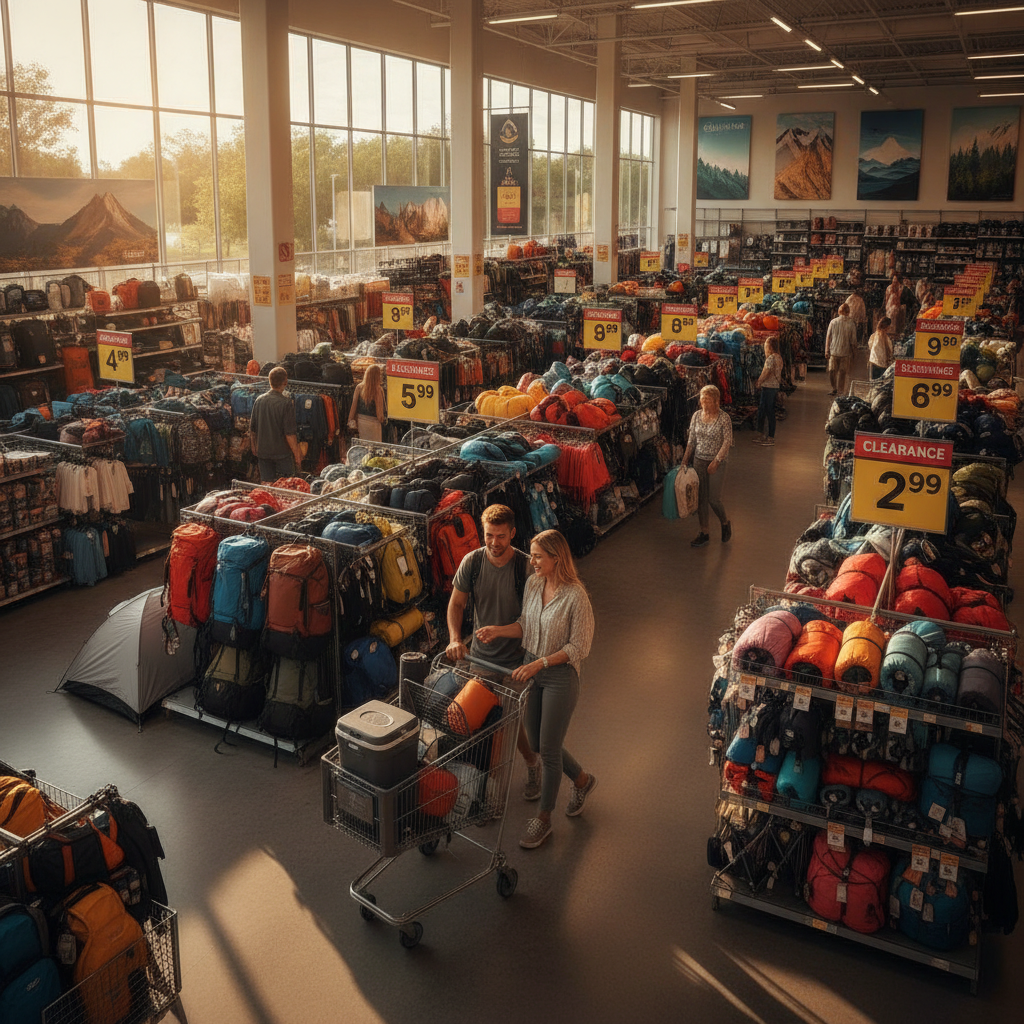
Retail pricing for outdoor and camping gear follows one of the most predictable cycles in all of consumer shopping, and the final two weeks of August represent the single most powerful clearance window in that entire calendar. Most shoppers assume spring is the right time to buy tents, sleeping bags, and hiking equipment — right before camping season begins — but that logic leads them directly into peak demand pricing. The reality works in reverse: the best deals emerge when the season is winding down, inventory is deepest, and retailers are genuinely motivated to clear floor space before fall merchandise arrives.
Why Late August Creates a Perfect Storm for Clearance
Retailers order outdoor and camping inventory months in advance, meaning by late August their warehouse shelves are loaded with product that needs to move before autumn. The buying public has largely finished its summer camping trips and isn't thinking about gear, which drops demand sharply just as supply remains high. This imbalance is precisely what forces clearance pricing that bears no resemblance to the modest discounts seen during spring promotional events. Stores like REI and retailers on platforms like Amazon begin marking down sleeping bags, camp stoves, and tents not because they want to, but because holding that inventory through fall and winter carries real costs. The window is narrow, but the savings are genuine.
Understanding the Inventory Pressure Behind the Markdown
Outdoor specialty retailers operate on slim margins and cannot afford to warehouse bulky, seasonal products indefinitely. When late August arrives, the calculus shifts: a heavily discounted tent sold now is more profitable than the same tent sitting in a warehouse through October. Shoppers who understand this dynamic gain an enormous advantage, because the markdowns that appear in these two weeks aren't the manufactured discounts of a promotional sale — they're driven by actual business necessity. The gear is identical to what was on shelves in April, but the price reflects a completely different set of incentives.
How Online Retailers Signal the Best Clearance Moments
The most reliable way to track late-August clearance online is through price-monitoring tools rather than waiting for email newsletters. Extensions like Camelizer, which tracks Amazon price history, allow shoppers to see exactly when a product drops below its historical low — a strong signal that end-of-season clearance has genuinely begun. Retailers don't always announce clearance with bold banners; sometimes the best markdowns appear quietly in a product listing and disappear just as fast. Setting up price alerts in early August means you're positioned to act the moment a sleeping bag or backpacking stove crosses into clearance territory, rather than discovering the deal after it's already sold out.
Using Wishlist Strategies Across Multiple Platforms
Building wishlists across REI, Backcountry, and Amazon in the weeks leading up to late August creates a ready-made clearance shopping list that requires no scrambling. When prices drop, the items you've already evaluated and want are right there, and the decision-making is already done. This matters more than it might seem: end-of-season clearance moves quickly, and shoppers who spend time evaluating products during the clearance window often miss the deepest discounts. The preparation phase — researching brands, reading reviews, comparing specifications — belongs in July, so that August becomes purely about executing purchases at the right price.
Why Spring Sales Don't Actually Compete
Spring sales for outdoor gear are promotional events designed by retailers to stimulate demand before the camping season begins. They offer discounts that feel meaningful — often in the range of fifteen to twenty percent — but they're structured to protect margin while generating excitement. Late-August clearance is structurally different because it's not a promotion; it's a liquidation. Retailers are not trying to inspire purchases, they're trying to recover costs on inventory they need to move. The price reductions that result from this pressure consistently and significantly outpace anything offered during spring. Shoppers who compare year-over-year pricing on the same items from brands like Nemo Equipment or Big Agnes will find this pattern holds remarkably consistently.
The Specific Categories That See the Deepest Cuts
Not all outdoor gear discounts equally in late August. The categories that see the most aggressive markdowns are typically the bulkiest and most expensive to warehouse: tents, sleeping bags rated for warm weather, large-capacity coolers, and camp furniture. Compact, year-round items like headlamps, water filters, and trekking poles tend to hold price better because demand doesn't drop as sharply with the season. Focusing clearance-shopping energy on those high-bulk, warm-season categories captures the best of what this window offers. A quality three-season tent purchased at late-August clearance pricing will serve several future seasons — the upfront timing investment pays off for years.
Making Cashback and Stacking Work in Your Favor
Clearance pricing combines beautifully with cashback platforms, and late August is an ideal time to activate that combination. Rakuten regularly offers elevated cashback rates at outdoor retailers, and pairing that with store-specific credit card rewards can meaningfully reduce the final cost of an already-discounted purchase. The key is to check available cashback portals before completing any checkout, since rates fluctuate and some retailers offer significantly better cashback in one portal versus another on any given week. Stacking a clearance price with elevated cashback and a credit card reward turns a good deal into an exceptional one, without any additional couponing complexity.
Timing Checkout to Match Restock Cycles
Late-August clearance tends to deepen as the two weeks progress rather than peaking at the start. Retailers often apply an initial markdown and then, if items aren't moving quickly enough, apply secondary reductions in the final days of August. Monitoring items daily rather than checking once and walking away can reveal significant additional savings within the same clearance window. However, waiting too long on popular items — particularly tents and sleeping bags in standard sizes — risks losing the item entirely, since clearance inventory is finite. The balance between patience and action is the core skill this shopping window rewards.
The pattern that opens this topic — that the end of a season, not its beginning, is where the smartest purchases happen — holds across retail categories far beyond outdoor gear, but camping equipment makes it especially clear. When demand and supply move in opposite directions as sharply as they do in late August, the resulting clearance pricing isn't a lucky accident; it's a reliable feature of how the retail calendar works. Shoppers who recognize this and build their purchasing timeline around it will consistently spend less on quality gear than those who follow the instinct to buy at the start of the season when enthusiasm is high and prices are at their peak.