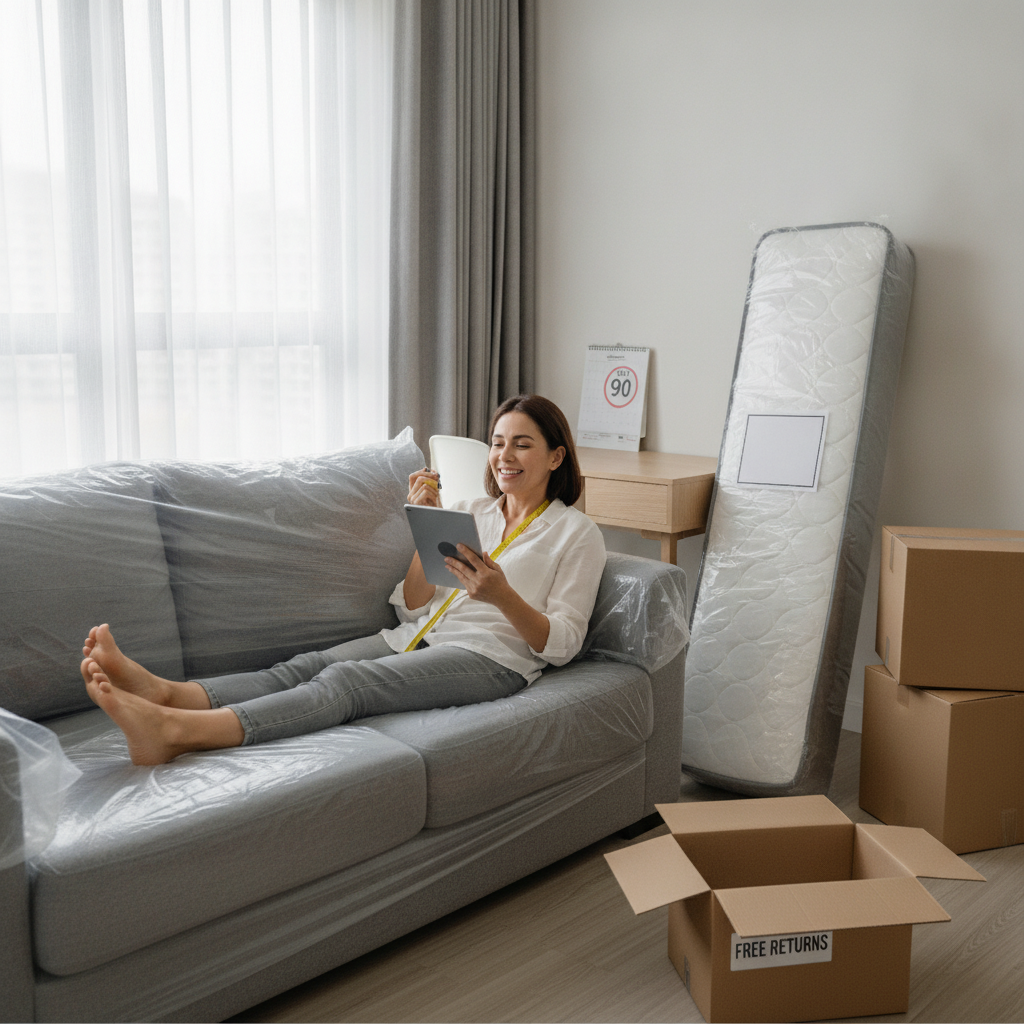
Buying a mattress or a sofa online — without lying on it, sitting in it, or touching the fabric — seems like the kind of decision that should end badly. And yet, for millions of shoppers, it doesn't. The reason that purchasing large furniture online has become genuinely workable isn't better photography or more detailed product descriptions. It's the return window — and knowing exactly how to use it before the order is placed.
How Did Online Furniture Buying Become Mainstream?
The shift happened gradually, then all at once. A decade ago, buying a mattress online felt eccentric. Now brands like Casper, Saatva, and Purple have built entire business models around the concept of trial sleeping — offering 100-night or even 365-night home trials that let buyers test a mattress under real conditions. The logic is sound: a ten-minute showroom experience tells a person far less about a mattress than three weeks of actual sleep. Large furniture retailers followed, extending return windows and free pickup policies to reduce the perceived risk of buying a sectional sofa without ever seeing it in person.
What Are the Return Window Rules Actually Saying?
Return windows for large furniture and mattresses are not all created equally, and the details matter enormously. A 100-night trial sounds generous until a buyer discovers it comes with a mandatory 30-night break-in period before a return is accepted. Some brands charge restocking fees or require the buyer to arrange their own freight pickup — a cost that can quietly erase any savings from buying online in the first place. Reading the fine print before purchase, rather than after dissatisfaction sets in, is what separates a smart online furniture purchase from an expensive lesson.
The most buyer-friendly policies tend to offer free returns with scheduled pickup, no restocking fees, and a clear minimum trial period after which a return becomes eligible. Brands like Nectar and Leesa have built reputations on straightforward trial policies, which is worth factoring into a comparison against lower-priced alternatives with murkier terms.
Why Testing at Home Outperforms the Showroom for Mattresses
Showroom testing is, by its nature, artificial. A person lies on a display mattress for a few minutes in street clothes, under fluorescent lighting, surrounded by salespeople — and is expected to predict how that surface will feel after eight hours of sleep. Home trials eliminate that problem entirely. Sleeping on a mattress for three to six weeks, in actual sleep conditions, provides a far more accurate picture of whether it suits a person's sleep position, body weight, and temperature preferences.
For large furniture, the case is slightly different but still compelling. Seeing how a couch fits in an actual room — under real lighting, against real walls — answers questions that no product image can. Color rendering on screens varies, and room scale is notoriously hard to judge from photos. Ordering, placing, and evaluating in context before the return window closes is simply a more informed process than guessing in a showroom.
How Should Shoppers Approach the Trial Period Strategically?
Once a mattress or large furniture piece arrives, the trial period clock starts — and treating it like a structured evaluation rather than passive use changes the outcome. For mattresses, tracking sleep quality during weeks two and three (after the initial adjustment phase) gives the most reliable signal. For furniture, assessing daily comfort, cleaning ease, and how the piece holds up to regular use within the first few weeks creates a much stronger basis for a keep-or-return decision.
Setting a calendar reminder at the halfway point of the return window is one of the most practical habits a shopper can build. Waiting until day 95 of a 100-night trial to decide creates unnecessary urgency and can result in keeping something mediocre simply because the logistics of returning it feel overwhelming. The trial window is a tool — it works best when used actively.
What Should You Check Before Placing the Order?
Before buying any large item online, confirm the following in writing rather than assuming from the marketing language. Check whether the return window begins at the order date or the delivery date — a difference of two weeks can matter significantly. Verify whether white-glove delivery and pickup are included or cost extra. Confirm whether the mattress or furniture must be in original condition or original packaging for a return to be honored — many brands explicitly waive packaging requirements for trial returns, but not all.
For large sofas, sectionals, or bed frames, also check delivery access requirements. Some companies will cancel or charge extra if the delivery truck cannot access the building or if the item doesn't fit through a doorway. Confirming room dimensions, doorway widths, and elevator access before ordering eliminates a category of problems entirely separate from the return policy itself.
Where Does the Real Risk Still Live in Online Furniture Buying?
The residual risk in buying large furniture online isn't really about comfort or aesthetics anymore — those are addressable through the trial period. The risk lives in the gray zone of return logistics. A shopper who falls outside the return window, or who misread the restocking fee structure, or who purchased from a smaller retailer without a clearly documented return process, faces a genuinely difficult situation. A king-size mattress is not something that goes back in an envelope.
This is why buying from established retailers with documented, customer-reviewed return processes matters more for large items than for almost any other online purchase category. The price difference between a well-reviewed brand with a clean return policy and a cheaper alternative with vague terms is often not as large as it appears once logistics costs and restocking fees are factored in.
The broader observation that opened this discussion holds: buying a mattress or large furniture online without testing it first can absolutely work out. The mechanism that makes it work isn't trust or luck — it's understanding the return window completely, using the trial period as a structured evaluation, and choosing sellers whose policies have been tested by real buyers in real situations. Approached that way, the couch or mattress that arrives at the door isn't a gamble. It's a decision with a built-in safety net.