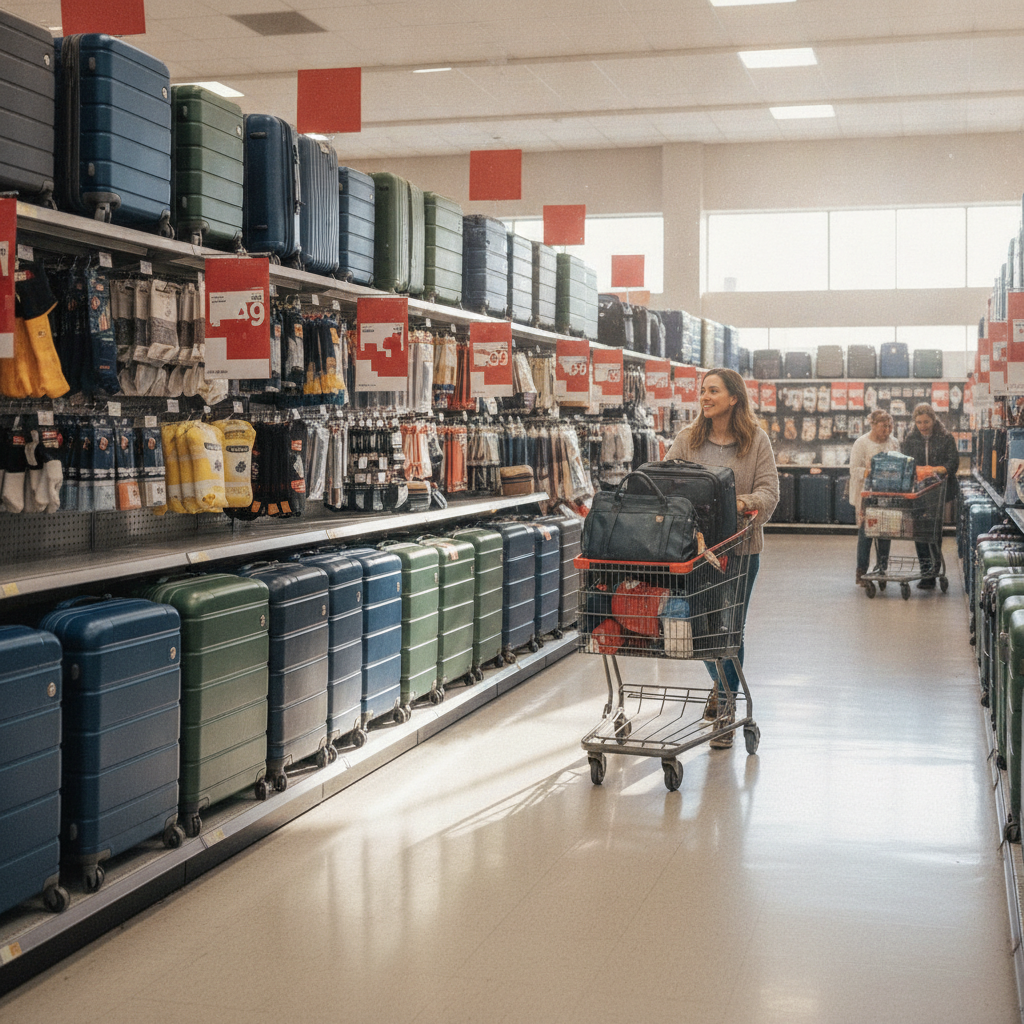
Every retail calendar has a few genuinely underused windows where prices drop not because of manufactured excitement but because of structural necessity. The first two weeks of January are one of those windows — and for luggage, packing cubes, travel pillows, carry-on bags, and related accessories, it's arguably the most reliable discount moment of the entire year. Most shoppers overlook it entirely, assuming the deals ended with December. That assumption quietly costs them money every time travel season rolls back around.
Why January Clearance Hits Differently Than Other Sales
Retailers carry significant luggage inventory into the holiday season expecting strong gift-driven demand. When that demand doesn't fully clear the shelves — and it rarely does — they're left with stock that takes up warehouse space heading into a period when consumers aren't actively shopping for travel gear. January is a low-travel-intention month for most households, which means retailers have every incentive to move product aggressively rather than hold it through spring. The result is markdown depth that promotional spring sales, with their manufactured urgency, simply can't replicate.
The Inventory Pressure That Creates Real Discounts
Unlike a flash sale or a retailer-designated shopping holiday, January clearance isn't designed to generate excitement — it's designed to solve a logistical problem. Stores and warehouses need to rotate inventory before new seasonal lines arrive. That pressure produces discounts that are structurally driven rather than theatrically applied. A carry-on spinner that was full price in November, discounted modestly for Black Friday, and gift-wrapped in December may now be marked down simply because it needs to move. That's a very different kind of discount from a spring sale that starts from an inflated anchor price.
Where to Find the Best Post-Holiday Luggage Deals
The strongest markdowns tend to appear across a predictable set of channels. Department store websites like Nordstrom Rack and Macy's consistently move holiday luggage overstock in early January through their clearance sections, often with additional percentage-off codes applied on top. Amazon's clearance and warehouse deals categories run parallel discounts during the same window, particularly on travel accessories like compression bags, luggage scales, and TSA-approved toiletry kits. Away, though a premium brand, occasionally runs quiet post-holiday promotions that don't get the same visibility as their launch events — worth checking directly.
Using Price-Tracking Tools to Time Your Purchase
Because the January window moves quickly, setting up price alerts before the new year begins gives you a meaningful advantage. The browser extension Camelizer, which tracks Amazon price history, lets you see exactly how low a specific item has dropped in the past so you can recognize a genuine clearance price when it appears. Google Shopping's price-tracking feature sends direct alerts when a product hits a target price across multiple retailers. The combination of knowing historical lows and receiving real-time alerts means you're not guessing — you're acting on actual data when the window opens.
Why Spring Travel Sales Don't Recover the Same Ground
Spring sales are positioned around travel intent — people start planning trips in March and April, and retailers know it. That demand gives them less pressure to discount deeply. The promotions that run under names like "travel event" or "adventure sale" in spring are often structured around modest savings on full-price inventory, not clearance-level reductions on existing stock. The retail math is simply different. January sellers need units gone; spring sellers need margin. Those two motivations produce fundamentally different price outcomes, and the shopper who understands that difference shops accordingly.
The Accessories Category Is Often the Biggest Winner
Hard-sided suitcases get the most attention, but the post-holiday clearance window is often even stronger for travel accessories — the category that rarely makes wishlists but gets deeply discounted when holiday gift inventory goes unsold. Packing cubes, travel wallets, neck pillows, portable luggage scales, and compression bags all tend to see clearance pricing in January that doesn't appear again until the following post-holiday cycle. Because these items have a lower price ceiling, the absolute discount may look smaller, but the percentage reduction is often steeper than on flagship luggage lines.
Building a Travel Gear Strategy Around the January Window
The most effective approach treats January not as a random month to check deals but as a planned shopping event on the annual calendar. Making a list of travel gear that's worn out, missing, or needed for upcoming trips before the window opens means you're ready to act rather than browse impulsively. Wishlist features on platforms like Amazon and Nordstrom Rack allow you to pre-load items and watch them cross into clearance pricing in real time. Shoppers who do this consistently report that their travel kit is both better-quality and lower-cost than what they'd assemble during any other time of year.
Thinking Ahead to the Trips You're Already Planning
January is also the month when many people begin seriously thinking about summer travel. Buying gear now, at clearance prices, before that planning converts into booking momentum, means the equipment is already handled when the trip takes shape. A replacement carry-on purchased in the second week of January at a meaningful discount is the same bag at a lower price than the one sitting on a shelf in April when spring travel ads are running everywhere. The timing isn't complicated — it just requires treating the post-holiday window as a deliberate opportunity rather than an afterthought.
The January clearance window for luggage and travel accessories is one of the few genuinely structural discount moments in the retail calendar — not manufactured urgency, but real inventory pressure producing real price reductions. Shoppers who mark the first two weeks of January as intentional deal-hunting time, use price-tracking tools, and arrive with a clear list of what they need will consistently assemble better travel gear at lower prices than any spring or summer sale is likely to deliver. The window is short, the discounts are real, and the preparation required is minimal.