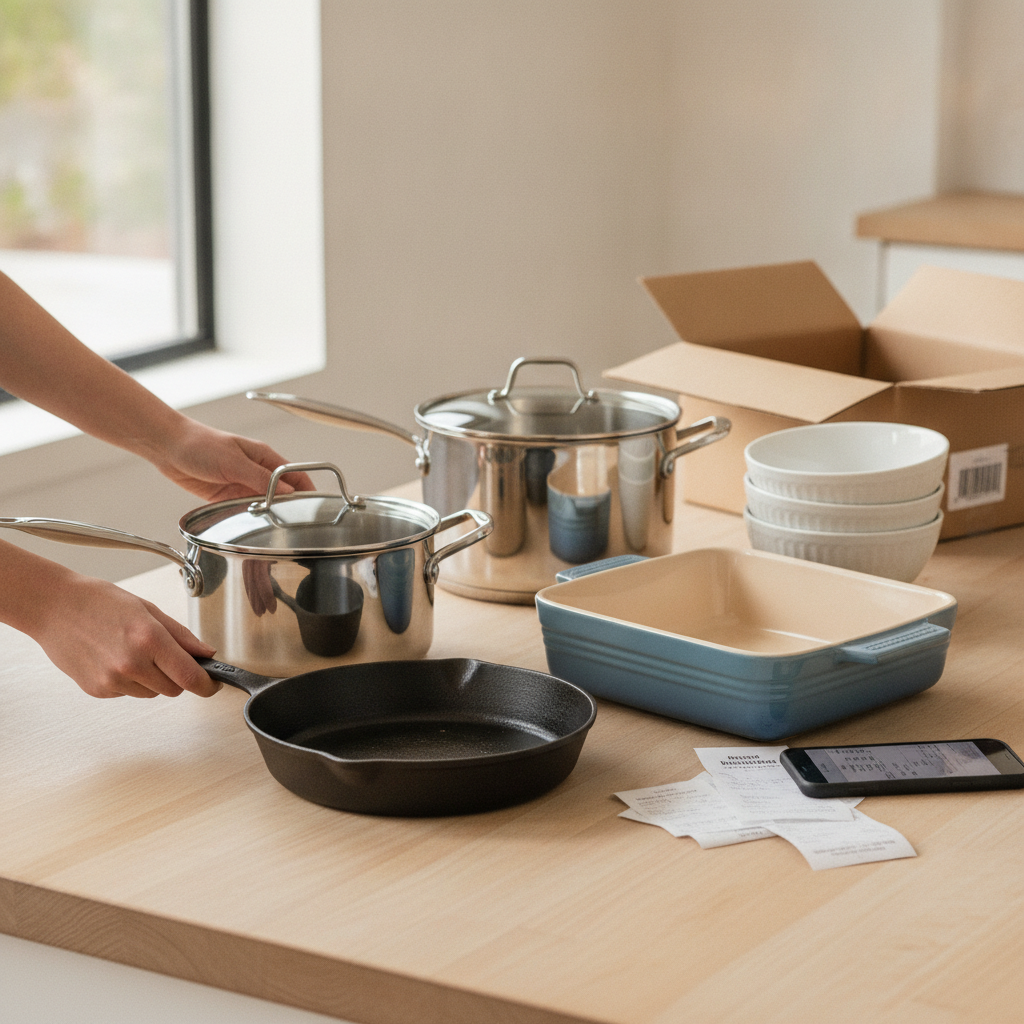
Kitchenware sets have long been marketed as the sensible, economical choice — the kind of purchase that feels responsible precisely because it arrives in uniform packaging with a single, satisfying price tag. The bundled cookware set, stacked neatly in its glossy box, signals completeness, and retailers have spent decades reinforcing that impression. Yet for shoppers willing to look past the packaging, the open-stock approach — purchasing individual pots, pans, and kitchen tools one piece at a time — consistently delivers better materials, longer-lasting performance, and a surprisingly lower total cost for the items actually used.
The Hidden Economics of the Bundled Set
When a retailer prices a twelve-piece cookware set, the math behind that number almost never works in the buyer's favor. Sets are assembled to hit a price point, not to maximize the quality of each individual piece. Manufacturers routinely include items that pad the count — a small saucepan that rarely leaves the cabinet, a steamer insert nobody requested, a lid that fits nothing else — while keeping material costs low enough to make the overall price look like a bargain. The result is a collection where two or three genuinely useful pieces subsidize several that will never earn a place on the stovetop.
Where Open-Stock Purchasing Puts the Money
Buying open-stock means spending the same budget, or less, on fewer pieces that are each of substantially higher quality. A single ten-inch skillet from All-Clad or a three-quart saucier from Mauviel, purchased individually, will outlast an entire boxed set from a mid-tier bundle line. The reasoning is straightforward: when a manufacturer prices a standalone piece, it carries the full weight of that item's quality reputation without being diluted by filler pieces. Shoppers who build their kitchen gradually through individual purchases tend to own equipment that performs at a noticeably higher level than those who started with a set.
How Online Shopping Amplifies the Advantage
The open-stock strategy becomes especially effective when combined with the deal-hunting tools available to online shoppers. Price-tracking browser extensions like Camelizer allow buyers to watch a specific piece of cookware — a particular Lodge cast iron skillet, for instance — and purchase only when the price dips to a historical low. Retailers including Williams Sonoma, Sur La Table, and Amazon regularly discount individual pieces during seasonal sales, and a patient shopper can assemble a complete, professional-grade kitchen over six to twelve months while spending less than a single bundled set would have cost. That kind of strategic accumulation simply isn't possible when buying a set all at once.
The Overlap Problem That Sets Create
One of the least-discussed costs of bundled cookware is functional redundancy. Most sets include multiple pieces of overlapping size and purpose — an eight-inch skillet alongside a ten-inch, or both a one-quart and a two-quart saucepan — creating storage problems and cluttered cabinets without adding real cooking versatility. Open-stock purchasing forces a more deliberate decision about what the kitchen actually needs, which almost always results in fewer, better-chosen pieces that earn regular use. The discipline of buying one piece at a time also tends to surface clearer thinking about cooking habits, producing a collection tailored to the way someone actually cooks rather than what a box designer assumed they might.
Material Quality and the Set Compromise
Bundled sets frequently mix materials or use thinner gauges of metal to maintain a marketable price point. A set advertised as stainless steel may include pans with thinner walls than the same brand's open-stock equivalents, which affects heat distribution, durability, and long-term performance. Cast iron, carbon steel, and fully-clad stainless pieces purchased individually carry no such compromise, because each piece is sold on its own merits. Brands like Staub and DeBuyer build their reputations on individual pieces, and that accountability to each item's performance shows in the consistency of the material. Buying open-stock is, in effect, a way of demanding that accountability rather than accepting whatever the bundle includes.
Building Your Kitchen Piece by Piece
For those ready to shift away from the bundled approach, the process is simpler than it might seem. Start by identifying the two or three pieces used most frequently — for most home cooks, that's a ten- or twelve-inch skillet, a three- or four-quart saucepan, and a large stockpot. Research each piece independently, comparing open-stock prices across retailers and checking deal forums like Slickdeals for recent sale history. Set up price alerts through a tracking tool and buy each item only when it hits a meaningful discount. Resist the urge to fill gaps quickly; the open-stock kitchen builds gradually and intentionally, and that patience is exactly where the savings accumulate.
The appeal of the bundled set will likely never fully disappear — there's a psychological comfort in the feeling of a complete kitchen arriving in a single purchase. But the actual kitchen that results from open-stock buying, assembled piece by carefully chosen piece, is almost always better equipped, better made, and built at a lower effective cost per item used. The bundled set offers the illusion of completeness; the open-stock kitchen delivers the real thing.