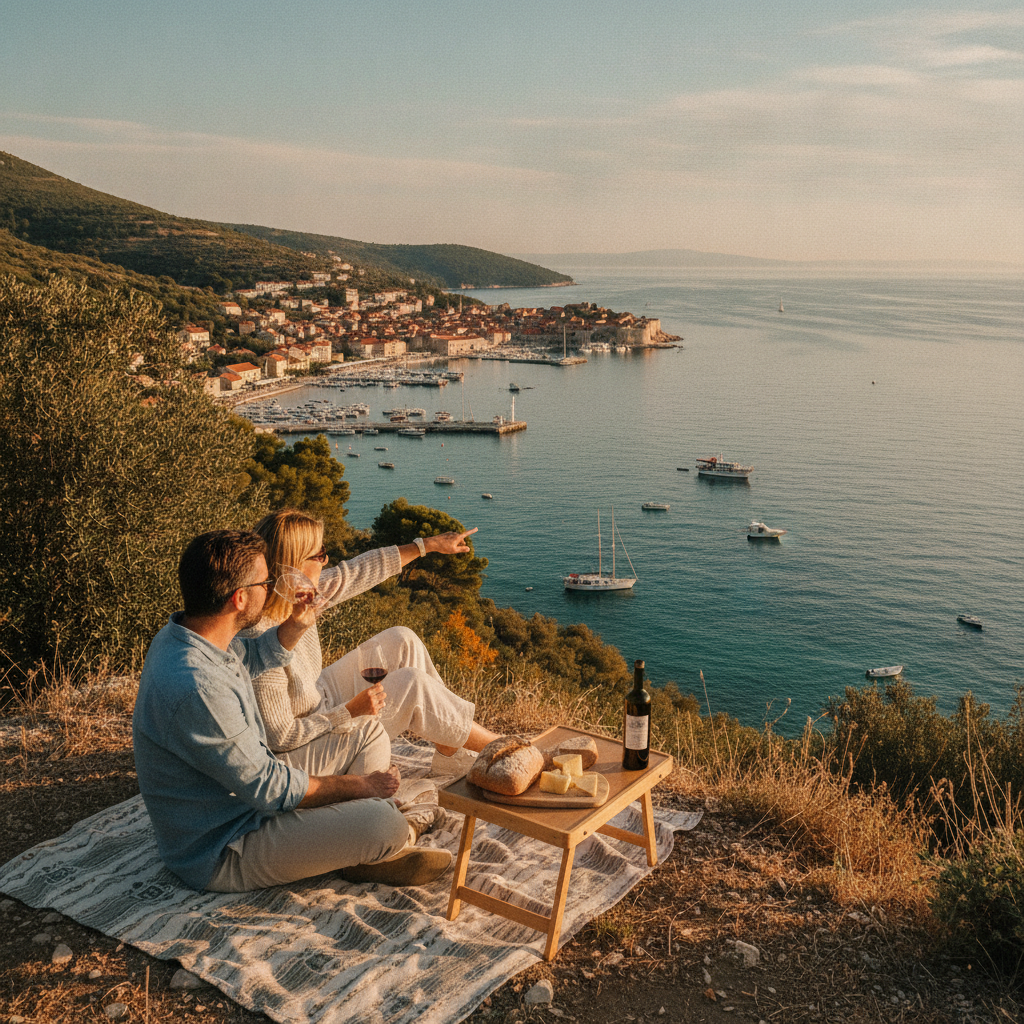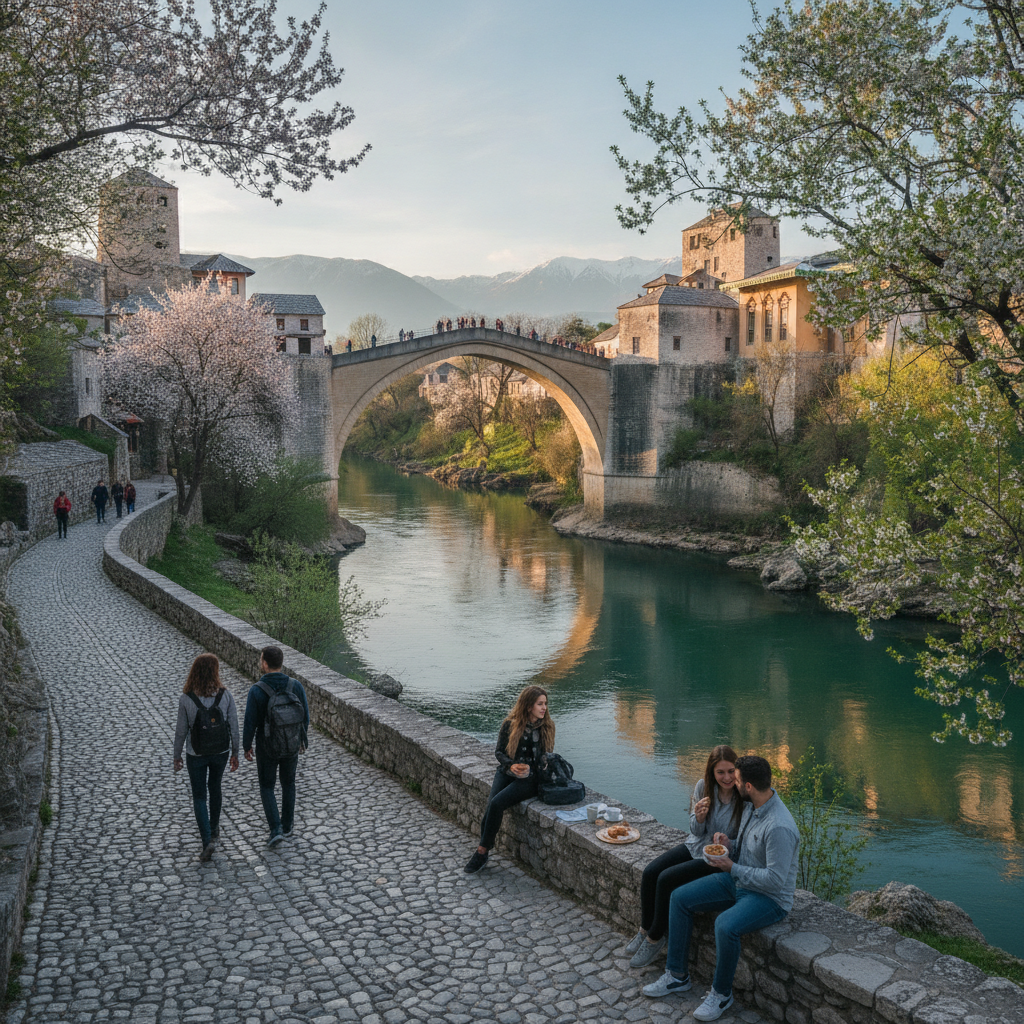
There is a particular kind of quiet that settles over a medieval town when the tourist season hasn't yet begun — cobblestones still damp from the last frost, café chairs stacked against stone walls, and locals moving through their mornings without the self-consciousness that comes from being observed. That quiet is precisely what the Balkans offers in early spring, and for travelers who have learned to read the calendar rather than follow the crowd, it translates directly into lower costs, richer encounters, and a more honest version of a place.
The Economics of Arriving Early
The Balkans — a loose geographic and cultural region spanning countries like Slovenia, Croatia, Bosnia and Herzegovina, Montenegro, Albania, and North Macedonia — operates on a tourism economy that compresses most of its revenue into a few intense summer months. The Adriatic coast, the fortified old towns, the mountain hiking trails: all of them brace for a surge between late June and August, and prices for accommodation, restaurants, and local tours adjust accordingly. Arriving in March or early April means stepping into a fundamentally different market. Guesthouses and family-run pansions (small, privately owned inns common throughout the region) are eager for early-season bookings and often list rates at a fraction of their summer highs. The same room in Kotor's old town or Mostar's Ottoman quarter that commands a premium in July can be had for considerably less when the season is still opening.
Beyond accommodation, the entire rhythm of pricing shifts. Restaurants serving peka — a slow-cooked meat and vegetable dish prepared under a domed iron lid, common in Croatia and Bosnia — aren't adjusting their menus for high-volume tourist turnover. The burek (a flaky, savory pastry filled with meat or cheese) from a bakery in Sarajevo's Baščaršija district costs the same as it always has, but the experience of eating it on a quiet street rather than a crowded one changes its character entirely. Early spring is when the region's food culture belongs more completely to itself.
What the Off-Peak Calendar Actually Looks Like
The shoulder window for the Balkans begins to close by mid-May in the most visited areas, which means the practical sweet spot is roughly late February through April. Snow lingers on the higher mountain passes, particularly in Montenegro's Durmitor National Park and the peaks above Lake Ohrid in North Macedonia, but the coastal towns and inland cities are entirely accessible and increasingly pleasant as the weeks progress. Temperatures in places like Split or Tirana in early April hover in the comfortable mid-teens Celsius — warm enough for long walks, cool enough to avoid the humidity that makes summer travel exhausting. Budget airline routes from Western Europe to regional hubs like Podgorica, Skopje, and Sarajevo exist year-round, and without peak-season demand inflating fares, the flights themselves often represent some of the more affordable entry points into Europe.
For travelers using tools like Google Flights' calendar view or Kiwi.com to track fares across flexible dates, the early spring window frequently surfaces as an outlier in terms of value — not because the destination is obscure, but because the demand curve simply hasn't caught up with the reality of how pleasant the region is at that time of year.
The Cultural Dividend of Slower Travel
There is something that happens when a traveler arrives before the infrastructure has shifted into hospitality mode. Conversations with locals take on a different quality. In a town like Gjirokastra in southern Albania — a UNESCO-protected Ottoman city of white-stone houses climbing a hillside — a café owner in early spring is likely to have time to talk, to explain the history of the kulla (a traditional tower house built for both defense and status), and to point toward the weekly market that doesn't appear in any guidebook. These encounters are not engineered for tourism; they emerge from genuine proximity and shared space.
The Balkans carries a layered cultural history — Ottoman, Austro-Hungarian, Byzantine, and Communist-era influences all leave visible marks on architecture, food, and social habits. Engaging with that complexity is easier when the streets aren't filtered through a crowd. The slow, raki-accompanied (raki being a strong fruit brandy ubiquitous from Slovenia to Albania) afternoon conversation at a wooden table becomes possible in a way it simply isn't when a town is managing thousands of visitors a day.
Stretching the Budget Further in Practice
For travelers who approach a Balkan trip with a modest but intentional daily budget, early spring makes the numbers genuinely workable. Accommodation in family-run guesthouses — often including a simple breakfast of bread, local cheese, and strong coffee — can be found at prices that would be impossible in comparable European destinations at any time of year. Markets in cities like Skopje or Sarajevo sell produce, cured meats, and local honey at prices oriented toward residents rather than visitors. Intercity bus routes, which form the backbone of budget transport throughout the region, run reliably and cheaply between major cities and smaller towns that rarely make it onto popular itineraries.
The traveler who plans loosely — who books the first and last night and leaves the middle of the trip responsive to what they find — tends to do better here than the one who locks in every accommodation in advance. Early spring availability means flexibility is a genuine option rather than a gamble, and that flexibility is often where the best-value lodgings appear: the guesthouse owner who'll negotiate a three-night rate, the mountain village host who offers a room that isn't listed anywhere online.
The Balkans in early spring is, in the end, a reminder of what travel looks like before it becomes a product. The quiet cobblestones, the unhurried bakery, the café chair still tilted against the wall — those conditions don't last long once the season shifts. But for the traveler who arrives while the mornings are still cool and the crowds are still elsewhere, the region offers something that neither money nor planning alone can manufacture: the sense of encountering a place on its own terms.